

Test Drive: The 2026 Porsche Cayenne E-Hybrid
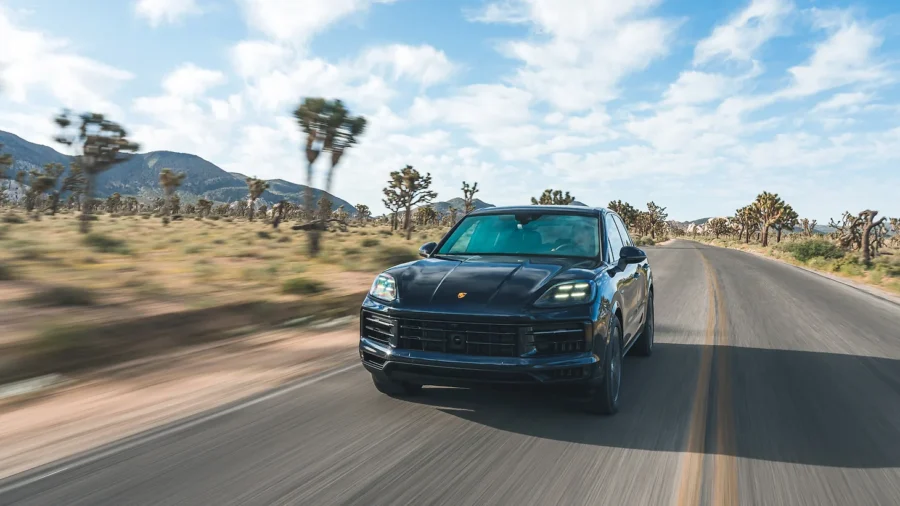
Porsche continues to prove you can have your cake and eat it too with the latest Cayenne E-Hybrid, providing consumers a partially electrified option combining traditional internal combustion performance and plug-in battery-assisted power in a familiar but fresh package.
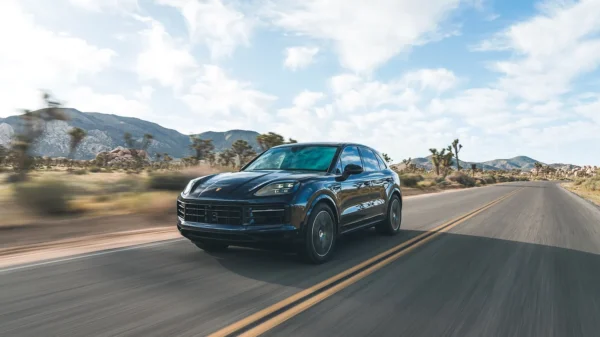
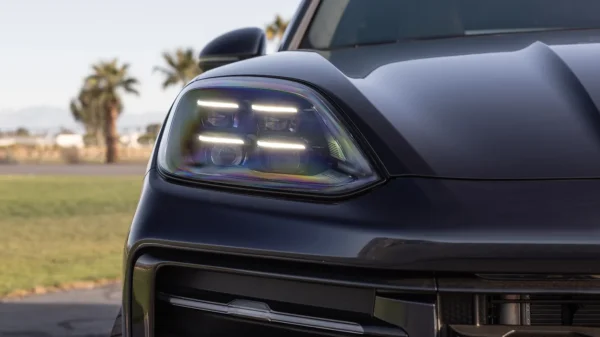
Now in its fourth generation (third for the E-Hybrid trim), the midsized crossover loses the pointed nose of the outgoing model and goes for a slightly stubbier front fascia like the Macan Electric with which it shares other design similarities. For example, the polygon matrix LED headlamps housing horizontal signature daytime running light elements, larger front bumper intake, burlier fenders, and a slimmed-down tail-lamp bar. The licence plate holder is farther down than before, giving the tailgate a clean, uncluttered appearance.
The interior takes a page out of the Taycan EV sedan, and the cabin is laid out in a similar fashion. The conventional shifter is moved up onto the dashboard, freeing up centre console real estate. Some of the tactile inputs removed during the great physical button purge of recent years have thankfully been returned, including a bank of climate control toggles integrated into the shiny black panel underneath the 12.3-inch infotainment screen.
For the first time, a curved 12.6-inch fully digital and customizable instrument display replaces an analog cluster, complemented by a 10.9-inch passenger display capable of showing performance data, entertainment content, and more. The leather steering wheel feels great in hand, and the stalk behind and to the left can now be used to access various driver assistance functions. Curiously, the heated wheel switch is completely concealed behind the middle spoke.
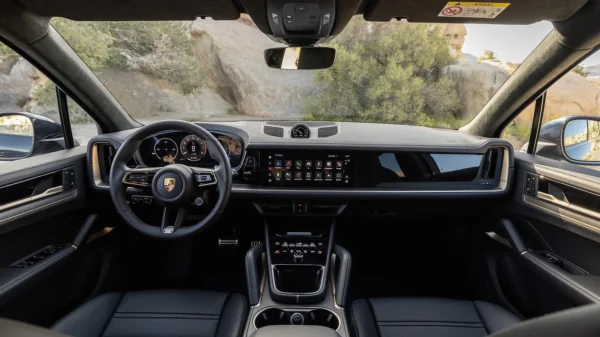
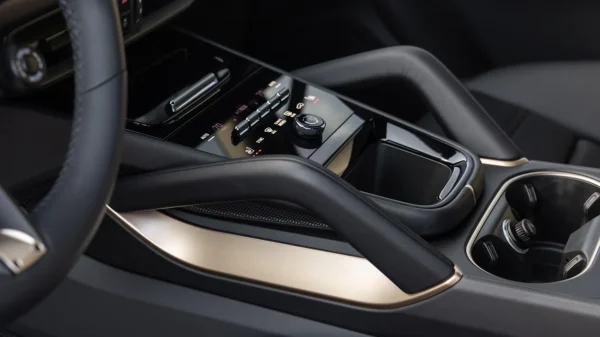
Propelling the E-Hybrid is an improved version of the previous 3.0-litre turbocharged V6 engine, mated to a new electric motor, larger 25.9-kilowatt-hour battery, and eight-speed automatic transmission. The powertrain produces 463 horsepower and 479 lb-ft of torque, and while it doesn’t feel blisteringly fast, the output is smooth, is refined, and pairs nicely with the steel spring suspension and standard suspension management electronic dampening system.
In normal city operation and/or off-roading, the revised two-valve shock absorbers automatically soften for a comfortable ride over potholes and uneven terrain, and it stiffens during high-speed manoeuvres, flattening out the vehicle during turns and reducing body roll. The SUV makes for quite the fun daily driver and is practical to boot, boasting ample room for five passengers and 545 litres of storage space in the luggage compartment.
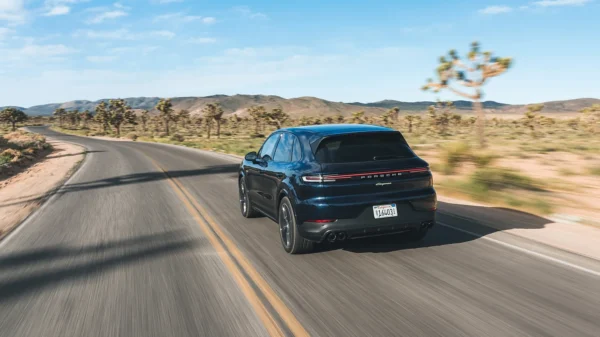
Charging the battery from empty via a Level 2 source takes around three hours, and at maximum capacity yields a zero-emission range in the neighbourhood of 40 kilometres.
Enthusiasts can also opt for a more powerful S E-Hybrid grade, adding an extra 49 horses, or wait for the upcoming Cayenne Electric that is expected to make up to 1,139 horsepower and go from 0 to about 100 kilometres per hour in just 2.5 seconds (Turbo model).
To sharpen looks further, owners can add a subtle colour-matched body kit, roof spoiler, and gloss-black detailing, as well larger split five-spoke 21-inch wheels (up to 22 inches is available) and bronzed quad sport tailpipes. Three new paint colours are being introduced: Algarve Blue Metallic, Montego Blue Metallic, and Arctic Grey.