

North Toronto’s Oldest House Receives a Sensitive Update
Local design firm Giannone Petricone Associates finds a middle ground between past and present.
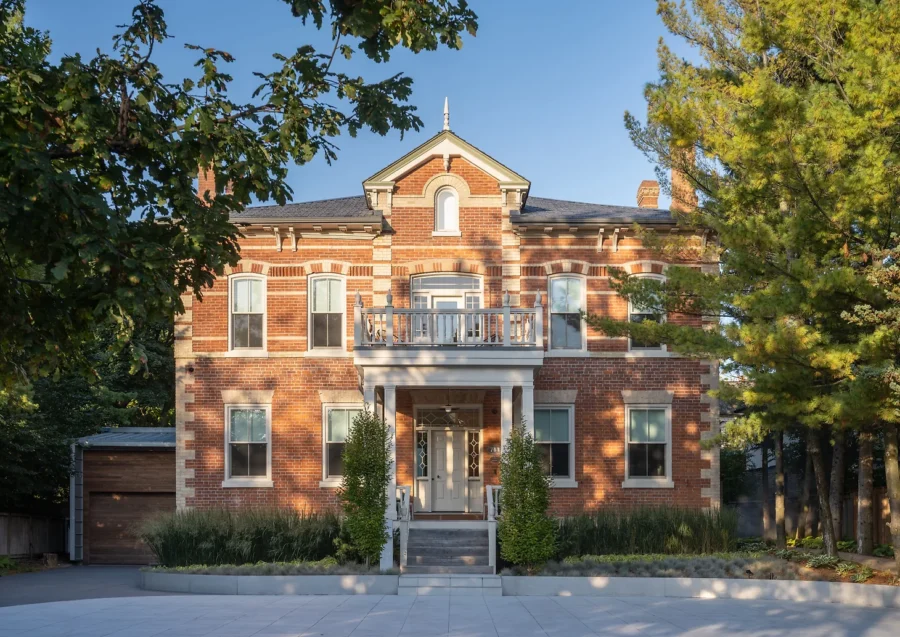
Sometimes, childhood dreams do come true. Such was the case for a Toronto resident who had admired a particular historic house in North Toronto since he was a child growing up in the neighbourhood. When, as an adult, he was able to purchase the home with his wife, the couple wanted to keep a link to the past. “Snider House was originally built in 1828 and is the oldest surviving residence in North Toronto,” says Pina Petricone, whose Toronto firm, Giannone Petricone Associates, was hired to update the home for the couple and their young family.


For both client and architect, the goal was to make the house function for contemporary living. “They were passionate about rehabilitating the home’s historical character,” Petricone says of the homeowners. “Our brief was really twofold: to develop a design that both honoured the home’s heritage and reimagined it for modern life.” Having worked on several landmark structures in Ontario over the years, GPA was up for the challenge, engaging as heritage consultants Era Architects to help in the process.

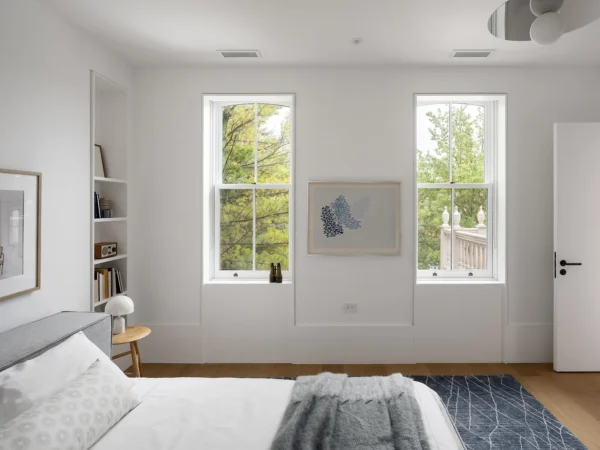


While the Snider house, which gets its name from the original resident, William Snider, is the oldest surviving home in Toronto, it had undergone many changes over its lifespan. “The home had endured nearly two centuries of additions and alterations—changes that had obscured its character inside and out,” explains Petricone explains. While the street-facing façade was designated a heritage structure in the 1970s and retained its original brick regency cottage style, the interior had little of its historic character intact.

“After removing the hodgepodge of recent additions, the street-facing façade was meticulously restored, including the masonry, roofing, porches, and front door, reinstating key architectural elements that had been lost or altered,” Petricone says. The historic polychrome brickwork was cleaned, and the porch was brought back to life with new, historically accurate pickets. The designers also reinstated key architectural elements of the façade that had been lost or altered over time. “The intention of this careful restoration was to keep the heritage façade as the focal point, ensuring it would be celebrated and visible to the community as a shared piece of cultural heritage,” Petricone says.

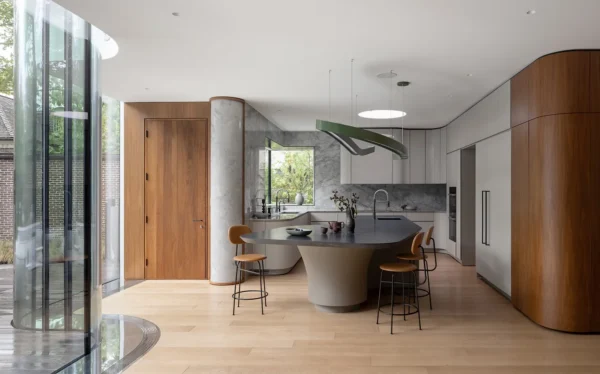
The back of the house tells a different story. Here, a sinuous two-story glass addition conveys a decidedly contemporary character as it makes space for a new family room and kitchen on the ground floor and a primary suite upstairs. Thoughtful detailing helps ease the transition between old and new, with contemporary elements mimicking the geometry of the heritage ones. “This approach embodies a rich layering of ideas that sees material, proportion, and craft come together, to create an architectural language that’s respectful of history and forward-thinking in spirit,” Petricone says.

Snider House, 1923. Courtesy of Toronto Public Library, Baldwin Collection of Canadiana.
Photographs by Scott Norsworthy.