

Shōgun History Comes Alive on Japan’s Nakasendo Way
Hike from Kyoto to Tokyo and explore the cultural roots of the hit series.
Climbing steep polished-wood stairs in a 17th-century Japanese fortress is an excellent workout for a history buff. As you huff and puff your way to the summit of Hikone Castle to view Lake Biwa, Japan’s biggest freshwater lake, it is also rewarding to know that you are exploring an impeccably preserved national treasure with its original keep.
This is just one highlight along the historic Nakasendo Way. The walkable 530-kilometre route from Kyoto to Tokyo has been repopularized lately by tour companies like Walk Japan.
Surrounded by formal gardens with a lake, curved wooden bridges, and singing cicadas, Hikone Castle once belonged to a loyal vassal of Tokugawa Ieyasu (1543-1616), the military-political genius who unified Japan. In 1980, it was used as a filming location for NBC’s hit 1980 Shōgun miniseries.
That five-episode drama starring Richard Chamberlain as John Blackthorne—an English sea pilot shipwrecked in Japan and drawn into a vicious power struggle between the rival warlords Toranaga (the fictionalized Tokugawa Ieyasu) and Ishido (Ishida Mitsunari) in 1600 AD—was watched on one out of every three American TV sets.
Today, Shōgun is enjoying a renewed vogue. The 2024 FX/Hulu adaptation returned this masterpiece to prominence. Starring Hiroyuki Sanada as Toranaga, the 10-part series won a record-setting 18 Emmys with heightened attention to Japanese cultural authenticity and historical details. The highly anticipated second season is slated to air in 2027.
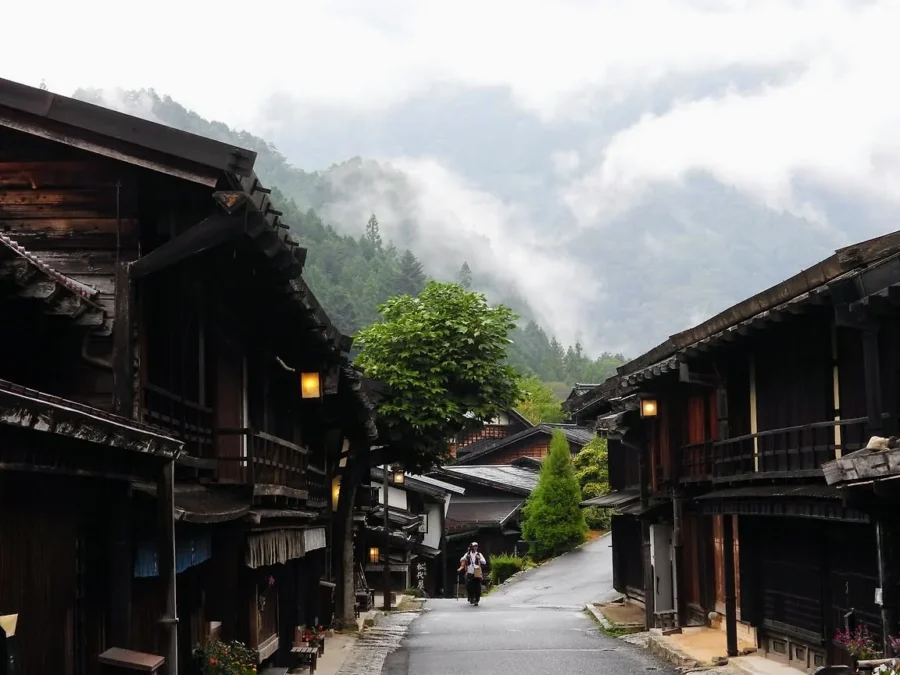
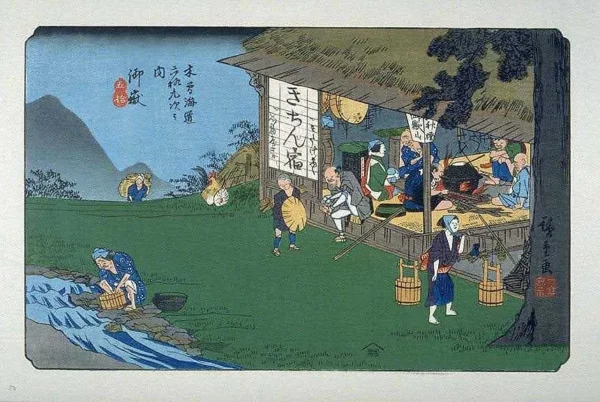
So it is an opportune time to explore the Nakasendo Way, which numbers Hikone among its 69 post towns, or way stations. During the peaceful, if strict and cloistered, era known as the Edo period (1603-1868) under the Tokugawa shōgunate, samurai, artisans, and farmers travelled along this route. They stopped off in post towns to eat, water their horses, and stay at ryokans (traditional inns).
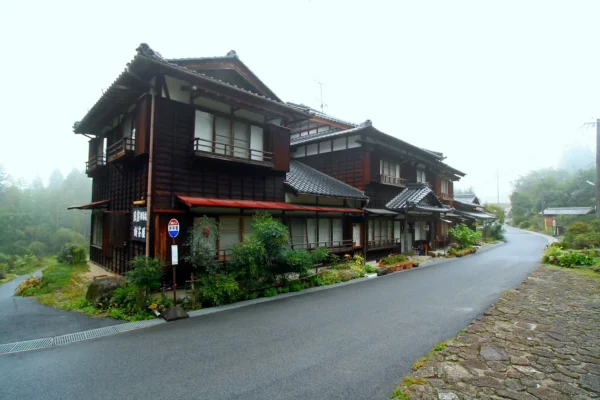
Shinchaya (inn). Courtesy of Walk Japan
Shinchaya is a prime example of how historical accommodation styles prevail to this day. Located near the hillside post town of Magome, this two-storey, dark-wood inn with beautifully contoured ceramic roof tiles offers fastidiously clean rooms with tatami mats and futons, along with compact sex-segregated onsen (hot springs baths). Dinner, served on low tables, could include Japanese delicacies such as salmon sashimi, crickets in ginger pickle, edamame beans, and wild boar.
A simple stone torii gate and lantern welcome you to a nearby woodland Shinto shrine. Guarded by lion-dog statues, it exudes serenity, with light breaking through the cedar and pine trees. The site evokes the Japanese reverence for nature that so often comes through in Shōgun.
The diverse terrain of the Nakasendo Way offers relaxing strolls through lush valleys and rice fields as well as mountainside climbs on ishidatami (centuries-old cobblestones). The experience enables modern Shōgun-entranced travellers to soak up Japan’s traditional essence beyond the massive fake-food signs of Osaka, the kimono-clad tourists taking selfies in Kyoto, and the neon-lit technology-driven frenzy of Tokyo.
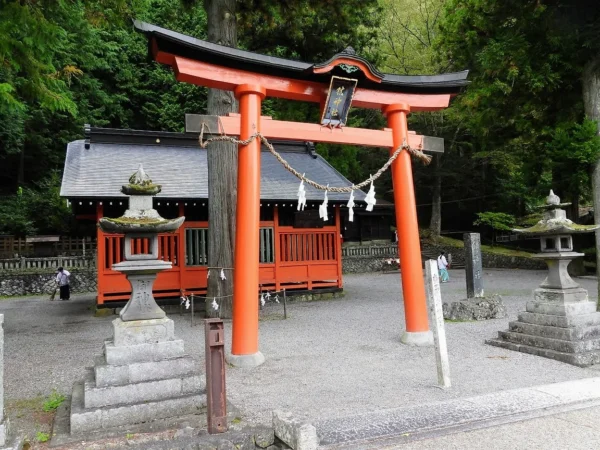
Shinto shrine. Photo by Lucas Aykroyd
It is always beneficial to do some reading before taking an epic trip, and Shōgun was originally a book. The massive, immersive, and gripping historical novel by James Clavell has sold more than 15 million copies worldwide since its 1975 publication.
Canadian fans of literature and history will be intrigued to learn that Clavell, a former British army officer, lived and wrote novels and screenplays in West Vancouver from 1962 to 1972. In addition, the new Shōgun series is filmed in British Columbia, including locations such as Howe Sound, Port Moody, and Ucluelet.
The word shōgun means “supreme military commander.” Exploring the Nakasendo Way may not grant you such an exalted status, but it does feel like a triumph to walk—even for a little while—in the footsteps of the samurai.
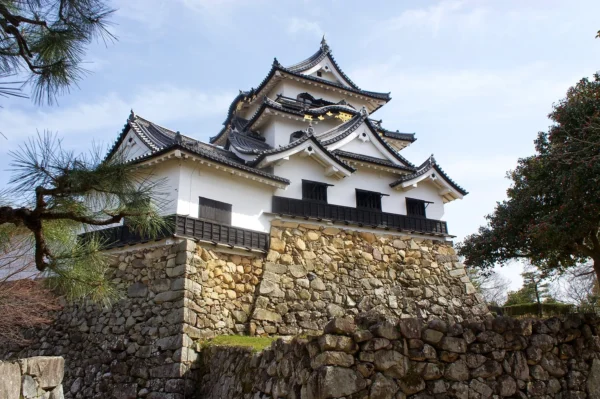
Hikone Castle. Courtesy of Walk Japan