Inside McLaren’s Project: Endurance
How an ultra-exclusive customer program gives owners unprecedented access to the engineering, coaching, and culture behind McLaren’s return to Le Mans.
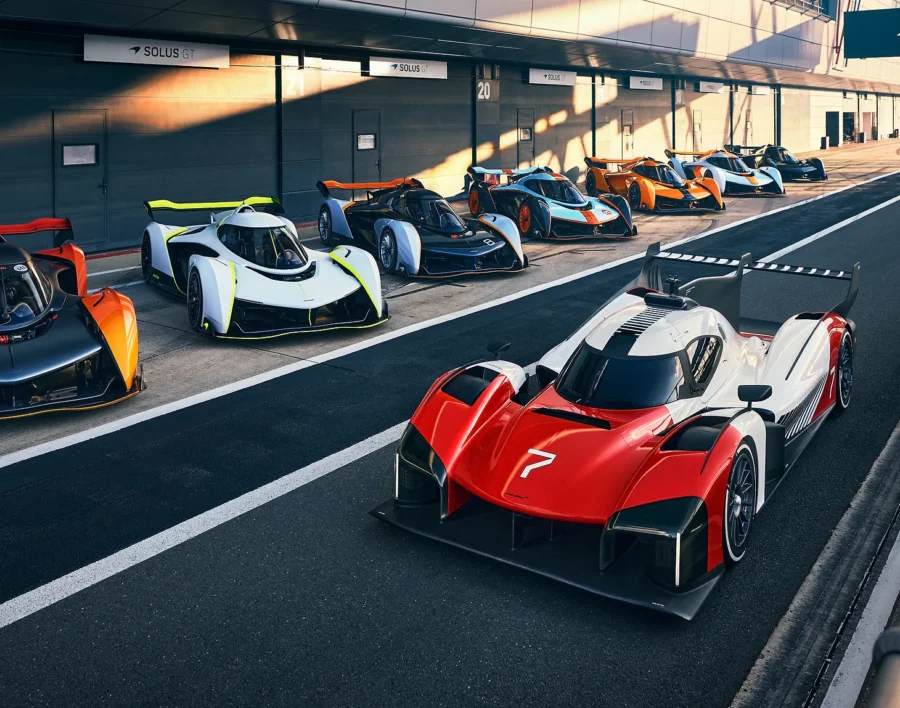
The Le Mans return is coming. In 2027, McLaren will take its new MCL-HY into the FIA World Endurance Championship (WEC) and the 24 Hours of Le Mans in the top hypercar class of one of the most unforgiving races in the world.
At the same time, McLaren’s Project: Endurance gives a small group of customers the chance to follow the action before the green flag flies. Not the celebratory dinner after the win, not the commemorative car built around a result already secured, but the years when a factory motorsport program is still being tested, questioned, and prepared. These customers will also, eventually, take possession of an ultra-exclusive McLaren track car based on the race machine, dubbed the MCL-HY GTR. For these fortunate individuals, the appeal is to possess a rare McLaren and to stand close to the work before it goes into the history books. The customer program contains the expected ingredients: private briefings, technical access, professional driver coaching, dedicated technicians, senior engineers, six events, and 12 days on circuit over two years. The compelling element is that owners are not buying a car inspired by a completed racing program. They are being brought in while the program is still forming. Their cars will emerge from the same development atmosphere as the factory racer. Their education in the GTR will run alongside McLaren’s attempt to return to the very pinnacle of endurance racing.
The most meaningful stop, of course, will be Le Mans.


In 2027, MCL-HY GTR owners will be inside the McLaren Hypercar Team environment, with pit access and a view of the strategy as the race unfolds. Hospitality is part of it—always is. But the real value is being close enough to see how fragile the whole enterprise remains: a pit stop slightly delayed, a slower car in a slower class getting in the way at the wrong moment, a weather call made with imperfect information.
For the record, Le Mans is not a normal race. It is a 24-hour contest that tests not only speed but also durability, strategy, concentration, and sheer luck.
In 1995, the McLaren F1 GTR won Le Mans outright, a remarkable achievement for a car closely related to the legendary F1 road car. It crossed the line first overall, turning a single victory into a defining moment for the company’s identity. The win proved McLaren’s engineering could withstand the ultimate test: an entire day and night at racing speed.
History matters—but it can’t do the driving. The F1 GTR earned its legacy on the track. More than 30 years later, that legacy carries weight precisely because it demands McLaren continue to prove itself.
Much of the MCL-HY GTR is shared with McLaren’s WEC car, including its 2.9-litre twin-turbo V6, the seven-speed sequential gearbox, and the carbon-infused braking system. While the race car’s hybrid powertrain is built to meet regulations, the MCL-HY GTR removes the hybrid hardware and draws approximately 720 horsepower from its ICE engine alone.
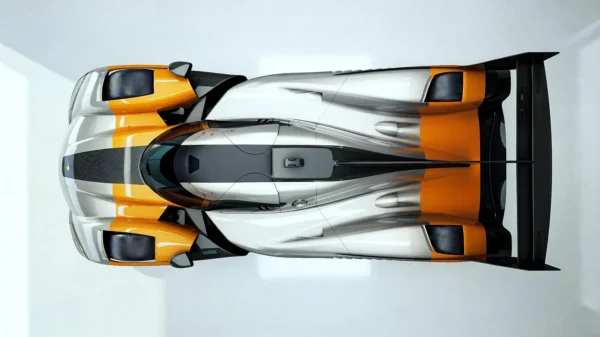
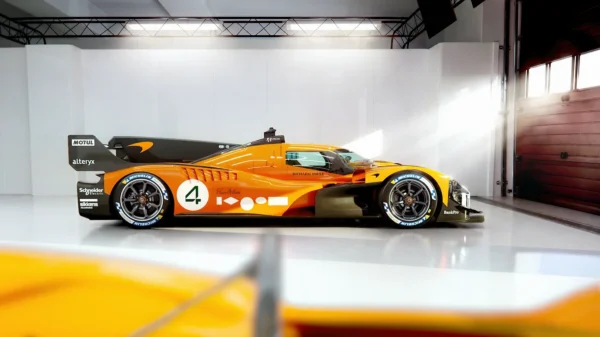

The result is a more powerful car that is also simpler to own and operate. Removing the hybrid system reduces complexity, while a more conventional brake system adds antilock braking, traction control, and multiple engine modes. This is not a tamer version of the hypercar but a clearer one: still serious, still fast, and less dependent on McLaren factory support every time it turns a wheel. Neil Underwood, McLaren’s head of hypercar track programs, put it plainly: Customers want to use the car outside the Project: Endurance program, as a track toy, with the freedom to enjoy it fully.
There will only be around 30 McLaren MCL-HY GTRs ever built, according to Underwood. Limited production is now the default language of the ultra-exclusive performance car. What gives this car a sharper edge is that it is attached to a result McLaren has not yet earned.
That may be the strongest argument for Project: Endurance. It asks customers to buy into ambition rather than memory. Before anyone decides what the comeback means, there will be a car, monitors full of data, and a garage full of people trying to make the next hour unfold as planned.