Matt Johnson Goes Looking for Anthony Bourdain
In his new movie Tony, the director peels back the mythology surrounding Anthony Bourdain to celebrate a young man in the messy process of becoming himself.
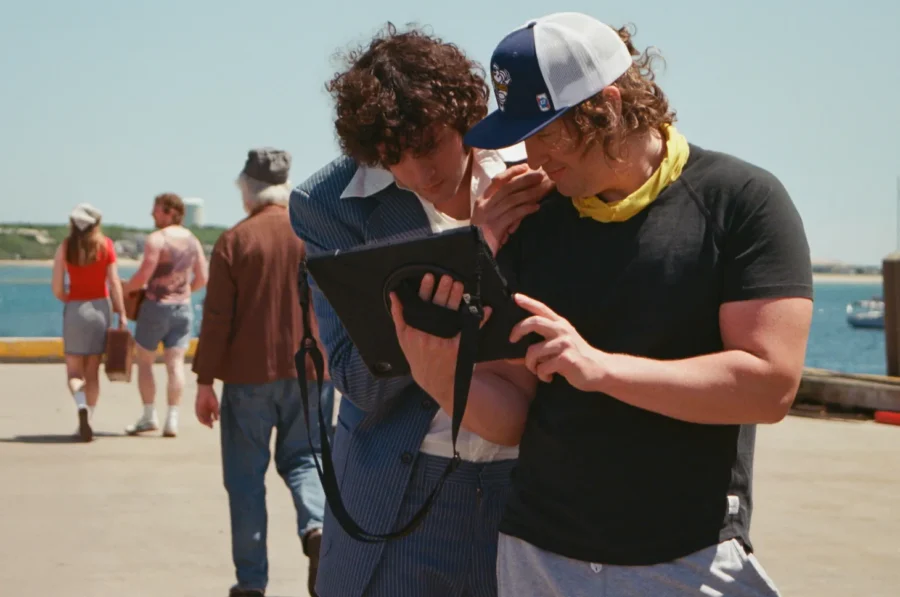
Dominic Sessa (left) and Matt Johnson (right) on the set of 'Tony.' Photo by Bob Gruen.
Every good storyteller knows you should never let the truth get in the way of a good yarn. Director Matt Johnson, of Nirvanna the Band the Show the Movie fame, is a master at toeing the line between fact and fiction without ever making his audience feel hoodwinked. “The audience always figures it out,” he says of where the most important truths lie.
His interest in the stories people tell about themselves makes Anthony Bourdain an especially fitting subject for Johnson’s latest project. Tony is an A24-produced film based on the late chef’s first foray into the restaurant industry. It draws from the opening chapters of Kitchen Confidential, Bourdain’s tell-all account of life on the line, both as a cook and a self-destructive renegade with a taste for hard drugs and haute cuisine. Published in 2000, years before television made him an international celebrity, the book is an autobiographical account, and it’s where the version of the beloved cultural hero the world now mourns was first conceptualized.
In the book’s final chapter, Bourdain admits he took liberties in crafting this work of self-mythology. Pseudonyms are slathered liberally throughout to disguise real people and places. It reads as a warts-and-all exposé, yet the truly taboo subjects get only brief, sanitized mentions. “Writing anything is a treason of sorts,” Bourdain writes. “Even the cold recitation of facts—which is hardly what I’ve been up to—is never the thing itself. And the events described are somehow diminished in the telling.”
Rather than taking Bourdain’s version at face value, Johnson set out to discover what lay between the truth and the way it’s told. While working on the script, co-written with longtime collaborator Matthew Miller and based on a screenplay by Todd Bartels and Lou Howe, he spent two months immersed in local life in Provincetown, Massachusetts, where Bourdain spent three formative summers in the 1970s at what Kitchen Confidential calls a “honky-tonk fish restaurant.”
“The first-hand stories of the people who were there in the ’70s could never have been uncovered through reading,” Johnson says of what he learned from Provincetown residents. “Much of the dialogue and events in that kitchen were explained to me in detail by people who were there.” Of course, he’d known going in that history is often subjective. “Some people I spoke with gave an even more extreme account of his time there, while others accused it of being greatly exaggerated,” he says of the locals’ response to Bourdain’s lore.
In many ways, that search for truth hidden inside performance has been a throughline of Johnson’s career. He was born in Toronto in 1985, one of four children to a Finnish doctor and an Icelandic pension-fund salesman, whom Johnson has described as “the funniest person in the world.” He has compared his job to a salesman’s, in that a director is always seeking to “convince [others] of a vision that they can be happy with, because that’s what great salesmen do. Like, you’re happy you bought it.”
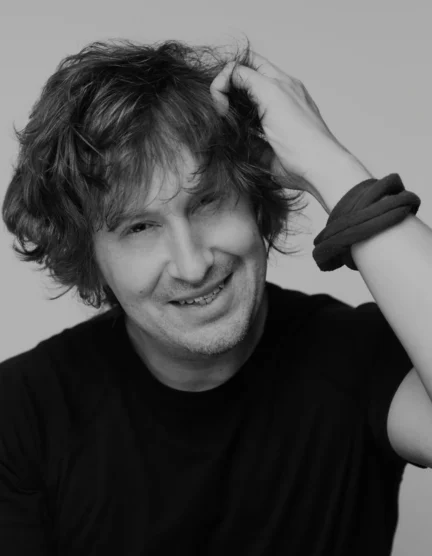
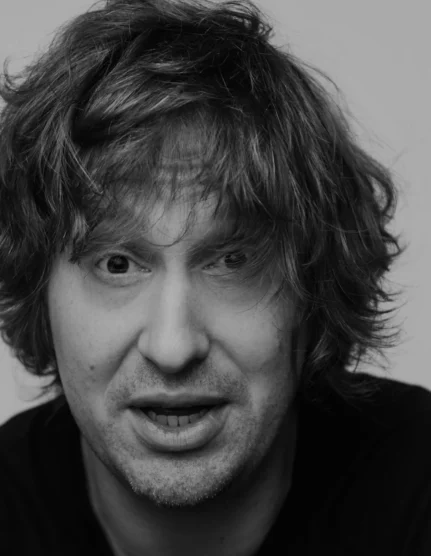
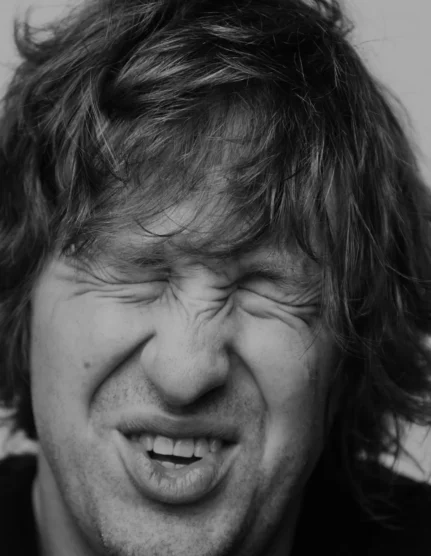
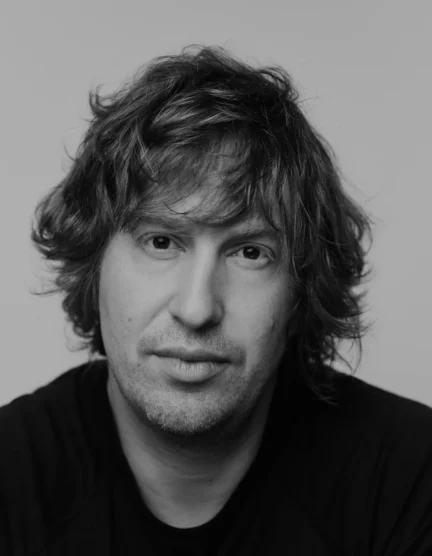
Matt Johnson has compared his job to a salesman’s, in that a director is always seeking to “convince [others] of a vision that they can be happy with, because that’s what great salesmen do. Like, you’re happy you bought it.”
Johnson met Jay McCarrol, his best friend and frequent collaborator, while in high school in Mississauga (there are some early videos of the two of them floating around the internet, Johnson still in braces), and other regular collaborators while studying film at York University. He made his directorial debut for an estimated $10,000 in 2013 with The Dirties, a mockumentary about a school shooting in which Johnson plays one of the would-be shooters, a bullied teenager named Matt. (That sentence alone tells you most of what you need to know about his do-it-yourself mentality, provocative humour, and puckish disregard for what’s considered permissible.) The film won the grand jury prize at the Slamdance Film Festival in Los Angeles and was picked up for international distribution by Kevin Smith, director of Clerks and Jay and Silent Bob.
Next came Operation Avalanche, which premiered at Sundance in 2016. Johnson wrote, directed, and starred as a CIA agent—also named Matt Johnson—who helps NASA fake the moon landing. “This is, like, one of those good lies,” his character says of the conspiracy he’s concocting, “like Santa Claus and the Easter Bunny.” To make it, Johnson and his crew posed as student filmmakers to gain access to actual NASA buildings, recording improvised interviews with real officials that were later worked into the film. Asked if this tendency toward mischief has ever landed him in serious trouble, Johnson is rather nonchalant: “Yes, all the time. But so far nothing has stuck.”
His next film was 2023’s BlackBerry, a biopic about the tech geeks behind the rise and fall of the pioneering smartphone that most of the world has forgotten was invented in Waterloo, Ontario. Johnson plays Douglas Fregin, a real person, which is probably why he didn’t rename the character after himself. “I love knowing the boundaries, and I have no idea why,” he says. “I think getting as close to them as possible is the definition of play.” BlackBerry went on to set a record for the most Canadian Screen Awards won by a single film, along with a string of international nominations.
It also established Johnson as an effective biographer, paving the way for Tony. “In the same way as the BlackBerry story, I felt no anxiety about the expectations around Bourdain,” Johnson says. “I never met him, and didn’t have any baggage around his status as a cultural hero, so all I could do was try to find the heart of the story.” He wasn’t among Bourdain’s legion of devoted fans and had only a passing acquaintance with the celebrity chef and TV personality behind No Reservations and Parts Unknown, who died by suicide in 2018. “I knew who he was and had seen the [Parts Unknown] episode where he goes to Quebec City, but otherwise I had no strong opinion on him,” Johnson says.
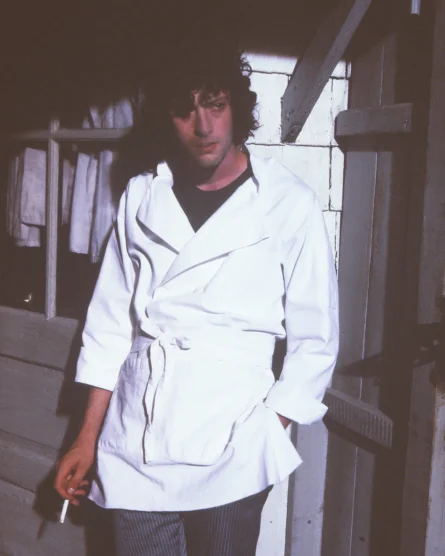
Dominic Sessa as Anthony “Tony” Bourdain in Tony. Photo by Bob Gruen.
Rather than attempting a definitive portrait of Bourdain, the film explores how legends are created. Tony is about how we develop a sense of self, discover our place in the world, and do both in community with other people. Friendship—or more accurately, bromance—sits at the heart of every Johnson production. “I love the Carl Jung quote, ‘No matter how isolated you are and how lonely you feel, if you do your work truly and conscientiously, unknown friends will come and seek you,’” he says. In his own succinct interpretation: “A best friend tells you who you are.”
Johnson made Tony without several of his longtime collaborators, in just 25 days (Nirvanna the Band the Show the Movie was shot over 200 days, or 17 years if you count earlier footage), outside his beloved Canada, and without his usual cinematographer Jared Raab by his side—though his replacement, Michael Bauman, whose credits include One Battle After Another (2025) and Licorice Pizza (2021), was hardly a downgrade. Luckily, he makes new friends quickly. Asked how the project came together, Johnson says simply, “I met Dom [Dominic Sessa, who plays Bourdain in Tony] in NYC and liked him so much that we decided to do the movie together.”
“Making movies is not fun,” Johnson quipped at a talk about Tony during the Provincetown International Film Festival in June 2026. “So you’d better do it with people you love.” True to form, the score comes courtesy of Johnson’s bestie, McCarrol, who has scored every one of Johnson’s films. “His approach was, ‘I’m going to let the audience know what’s going on in this kid’s head,’ ” Johnson says of McCarrol’s role—a crucial one, since the whole film is told from the perspective of a posturing teenage Bourdain tangling himself up in self-important lies, making the score the only window into his innermost thoughts.
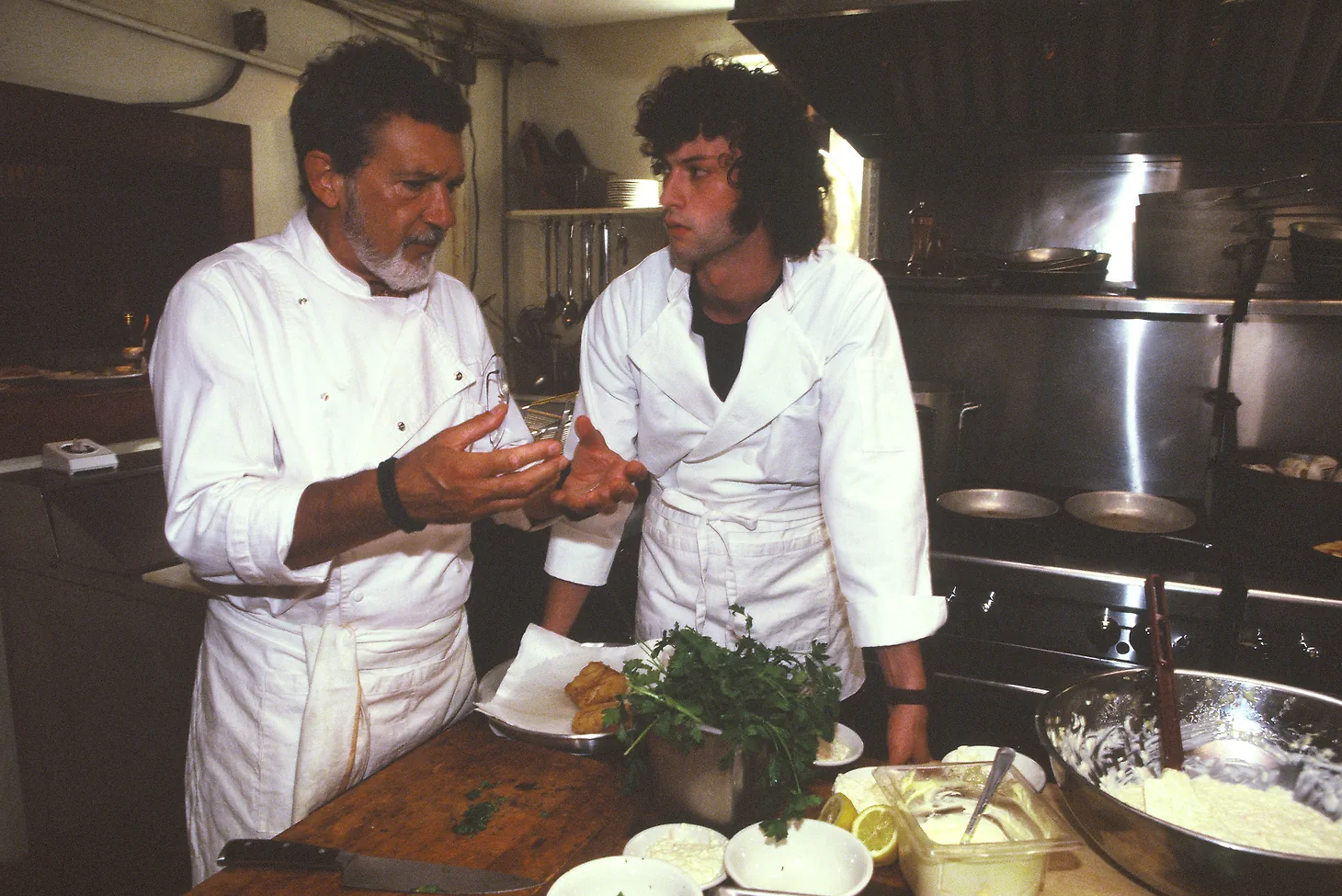
Antonio Banderas as “Chef” José Vate (left) and Dominic Sessa as Anthony “Tony” Bourdain (right) in Tony. Photo by Bob Gruen.
Rather than attempting a definitive portrait of Anthony Bourdain, Tony explores how legends are created. The film is about how we develop a sense of self, discover our place in the world, and do both in community with other people. “This is a movie about creating a persona as you enter adulthood, which in some ways is what all my movies are about.” —Matt Johnson
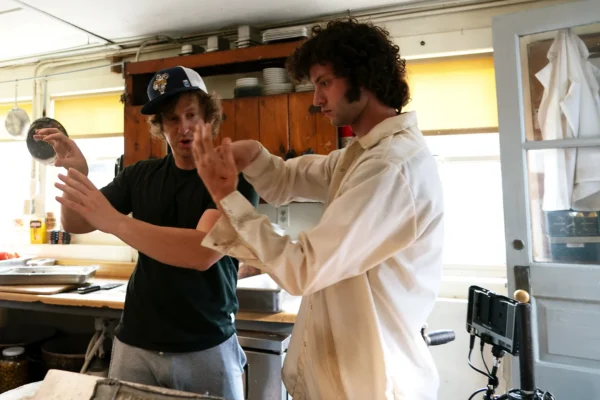
Matt Johnson (left) and Dominic Sessa (right) on the set of Tony. Photo by Seacia Pavao.
The way Johnson chose to present Bourdain grew directly out of conversations he had with Sessa about what it means to become yourself. “Dom and I talked a lot about the role models we each had at this age when we were putting the movie together,” Johnson says. “I owe everything to the people who I looked up to, and they didn’t even realize that I was looking up to them.” Tony is set in the mid-1970s, when Bourdain was in his late teens—in his own words from Kitchen Confidential, “a spoiled, miserable, narcissistic, self-destructive and thoughtless young lout, badly in need of a good ass-kicking.” Like anyone at that age, he’s assembling a personality from whoever around him seems cooler, more talented, or more sophisticated, which is to say: everyone. “This is a movie about creating a persona as you enter adulthood, which in some ways is what all my movies are about,” Johnson says. He rejects the old lament that youth is wasted on the young: “Any time spent creating yourself can’t be seen as a waste.”
As a guest on the podcast Stavvy’s World with comedian Stavros Halkias, who plays a line cook in Tony, Johnson joked that this might be the first of his films his parents would consider a real movie. It’s certainly a tonal departure from Nirvanna the Band the Show the Movie, a madcap comedy following Johnson (again playing “Matt”) and his best friend, Jay, as they travel through time trying to land a gig at the rather ordinary Toronto music venue The Rivoli. Based on a web series Johnson made with his friends between 2007 and 2010 with a follow-up in 2016, NTBTSTM leans hard into his silliest, most idiosyncratic instincts. It’s an inside joke that somehow became an international cult phenomenon and critical darling, winning audience prizes at TIFF and SXSW and Best Motion Picture at the 2026 Canadian Screen Awards.
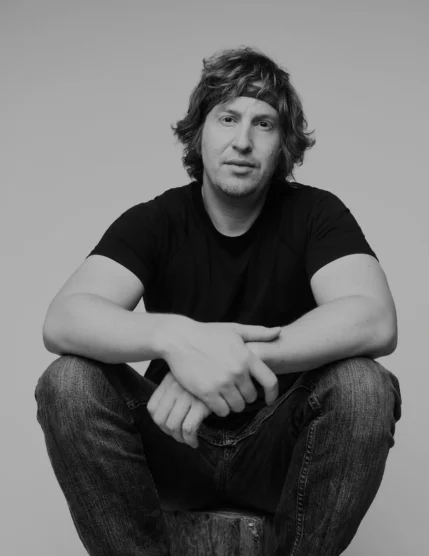
The projects Johnson has in development suggest a return to the eclectic style he’s known for: a live-action film based on the fantasy trading-card game Magic: The Gathering and another inspired by the 2015 Vice Media cocaine-smuggling scandal.
With Johnson’s growing success has come something else he shares with Bourdain: a passionate fan base whose devotion sometimes borders on the parasocial. Johnson, fortunately, seems blissfully unaware of any of it. “I have no social media, so I am not exposed to much of what you’re talking about,” he says. “When people stop me in the street to say hi, they’re all incredibly nice.”
Johnson’s fans love him for many of the same reasons Bourdain’s did. Both men are immensely talented, refreshingly original and authentic, and fiercely devoted to their crafts. Both are unafraid to ruffle feathers, calling out hypocrisy and injustice in their industries and beyond. At the 2026 Canadian Screen Awards, Johnson admitted to cynically gaming the system. He was incredulous that “The Alphabet Song,” a joke ditty from NTBTSTM, took home the award for Achievement in Music – Original Song. “So long as you stay in this country, you’re going to wind up with hundreds of these fucking things,” he said, accepting for Performance in a Supporting Role, Comedy, one of his film’s six trophies that night, his tone cavalier, even ungrateful. Then, expertly, charming the room back: “I love this country, and let’s all stay.” Like Bourdain, Johnson is a lovable rogue, getting away with breaking the rules because he’s just so genuinely likeable. He’s someone you’d want as a friend, even if you’ve never actually met him.
Also like Bourdain, Johnson got his start somewhere unglamorous and unlikely. “I worked at the Ontario Science Centre for seven years, and it was the best thing that ever could have happened to me,” he says of the job he had that helped him fund his first feature. “I had to wear a white lab coat and speak to the public 10 hours a day about things I had absolutely no knowledge about. Nothing could have better prepared me for being a director.”