Heather Goodchild’s Beautiful In Between
The Toronto artist's new solo exhibition at the Clint Roenisch Gallery entangles the natural and synthetic.
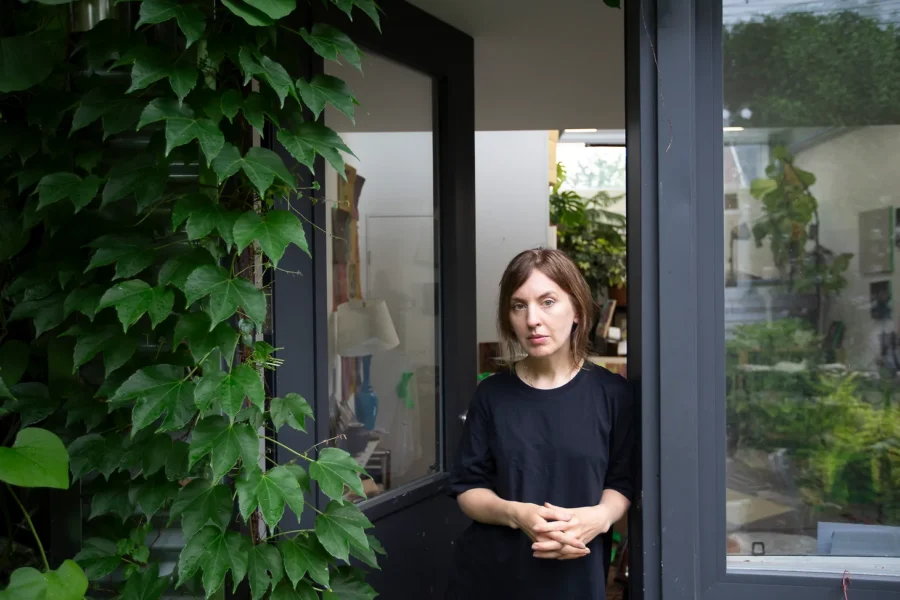
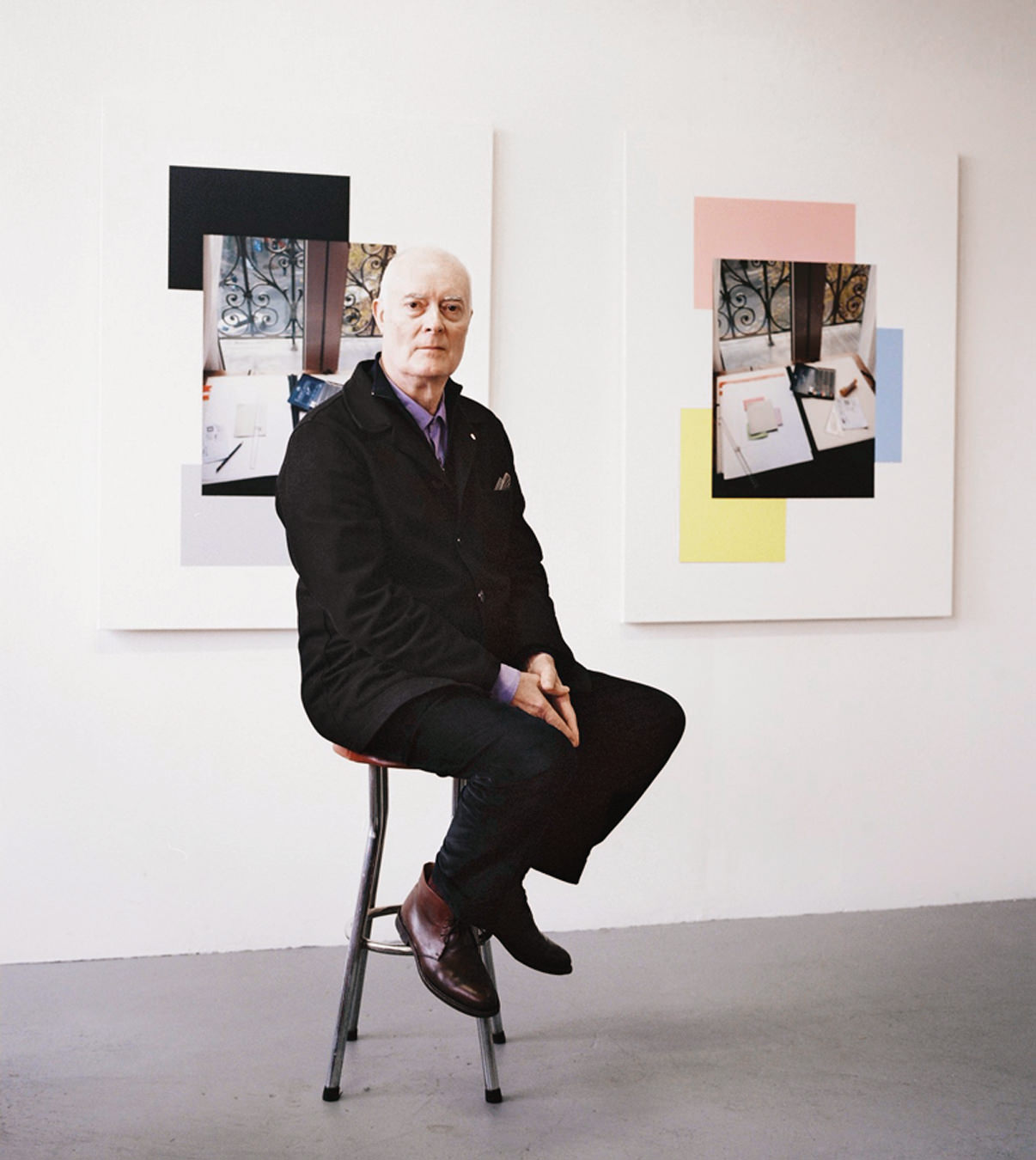
Portrtait by Jane Williams.
Toronto is not known for its natural beauty. Its mostly grey landscape of chain-link fences, asphalt roads, and half-constructed condos is only occasionally interrupted by patches of stubborn green. But its rough edges are softened by unruly wildflowers, which erupt through the cracks in its neglected margins at every opportunity. Wildflowers don’t need ideal conditions to thrive; they find a way to occupy inhospitable places, rampant even in soil laden with heavy metals. Artist Heather Goodchild, born and raised in Toronto, often finds them creeping into her artwork, too.
In Left at Etruria, her solo exhibition opening September 10 at Clint Roenisch Gallery, Goodchild brings together landscape paintings, hooked rugs, ceramics, and quilt-based works. “The core theme is nature, colour, and then our human experience of that,” she says.
People are present in Goodchild’s landscapes, though not always obviously. Figures are obscured, walking away, or glimpsed through a distant window. More often, we see evidence of human life via fences, walls, and the boundaries of gardens. The viewer is positioned as a voyeur, always observing undetected. “There’s a lot of looking and not being a part of,” Goodchild says. Each of her vistas unfolds in layers, pulling the eye past the foreground toward details that grow increasingly more elusive.
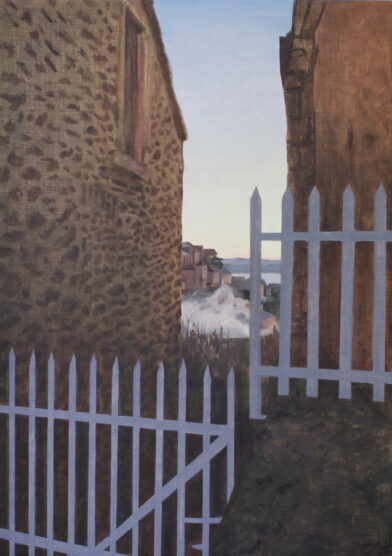
At Belvès (2026). Courtesy of Clint Roenisch gallery and the artist.
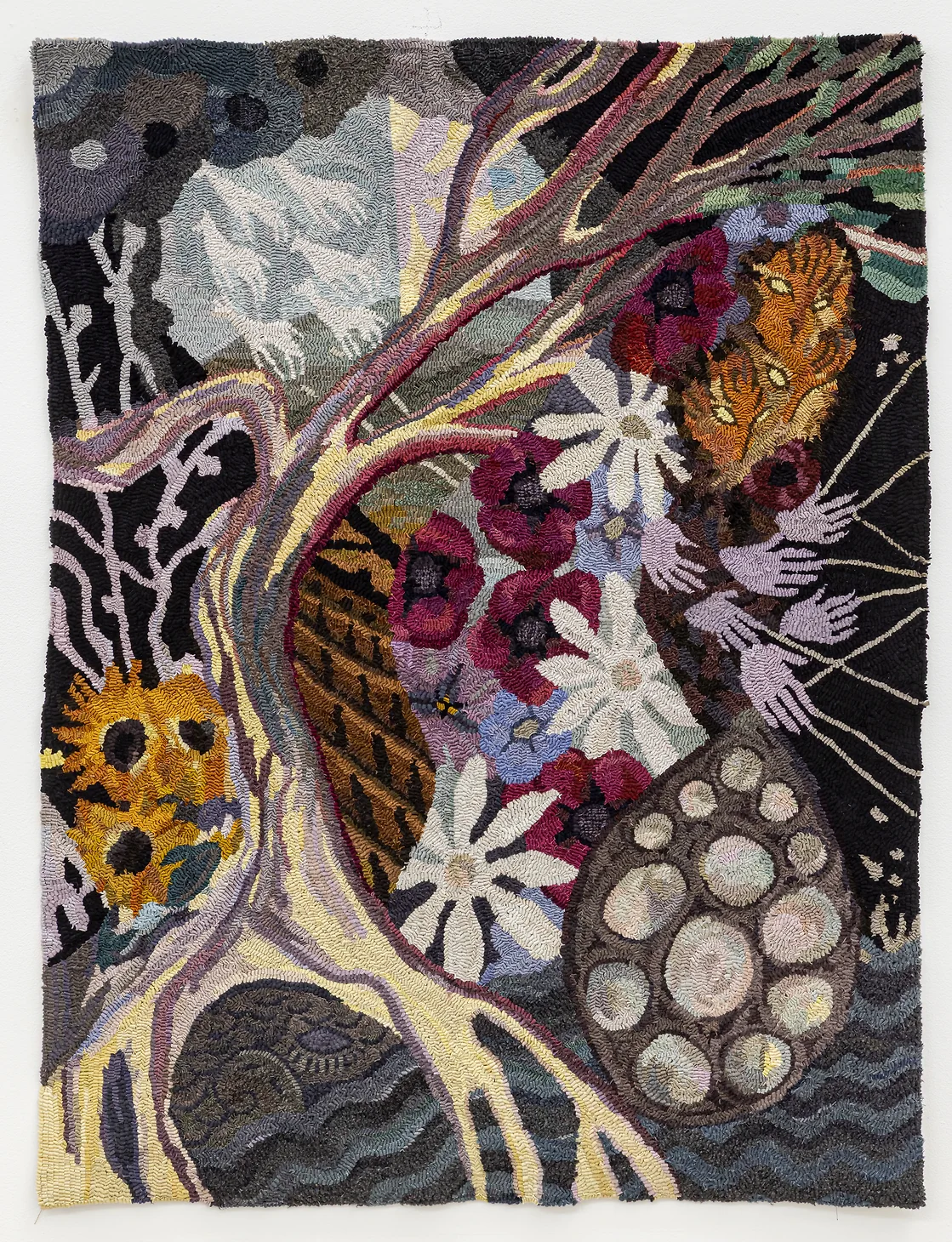
The Spinner, The Dealer, The Assassin (2025). Photo by Toni Hafkenscheid. Courtesy of Clint Roenisch gallery and the artist.
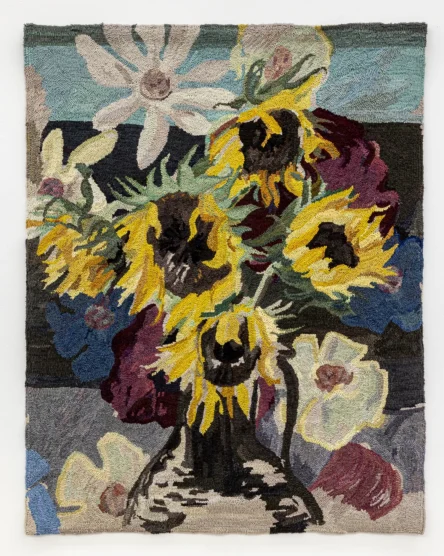
Sunflowers With Lorna’s Rug (2024-25). Photo by Toni Hafkenscheid. Courtesy of Clint Roenisch gallery and the artist.
In her textile works, Goodchild stretches the fleeting moments she paints into something more monumental, reinterpreting images using the traditional handicraft of rug-hooking. “I’m taking something that I painted in maybe an hour or less, and then this takes months,” she explains of her textile works. The pieces of wool she uses are dyed by hand, using colours made with indigo, cochineal, madder, and logwood, or local wildflowers such as goldenrod, curly dock, and Queen Anne’s lace. In a recent experiment, Goodchild used synthetic acid dyes to replicate her naturally derived palette and found her assumptions upended. The natural dyes resist ugliness, while their synthetic counterparts can easily veer into “other colours that are hideous.” If a woman crushing up beetle shells and coaxing colour from scraggly weeds conjures up an image of a mystical herbalist, Goodchild doesn’t mind. “Witchiness, yeah,” she acknowledges.
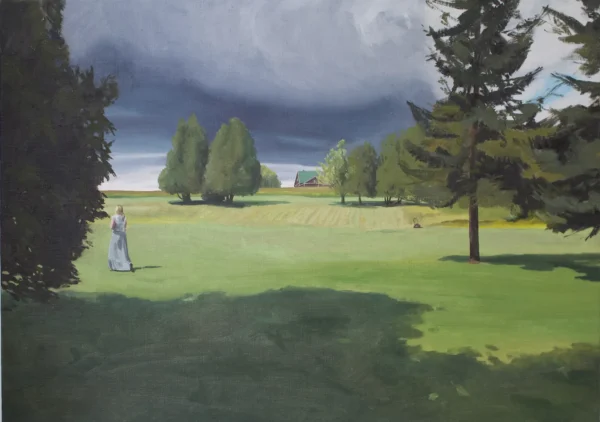
Near the Saugeen River (2026). Courtesy of Clint Roenisch gallery and the artist.
While Goodchild’s a practised alchemist, she has no formula for the work itself. “I’m not an artist who conceptually sets out a framework and then makes the work,” she says of her intuitive approach. “The work happens, and then you question what it’s about. I’m still questioning.”