A House for Riopelle
In Quebec City, a museum pavilion is built to do Riopelle justice.
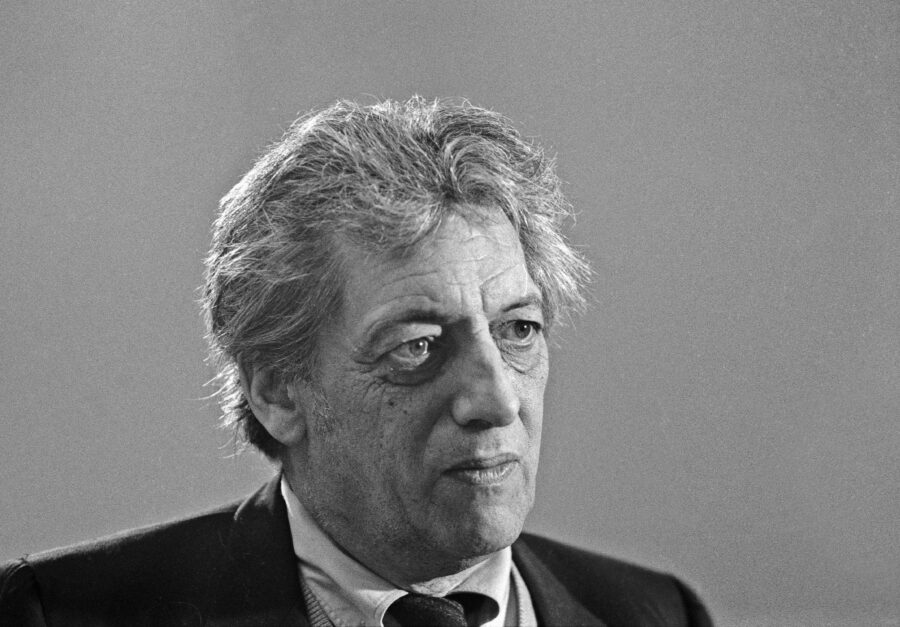
Patrick Altman, Portrait of Jean Paul Riopelle, 1981. Gelatin silver print, MNBAQ, ressources documentaires.
A rare thing happened recently in Quebec City: a museum building in Canada dedicated to one artist. Espace Riopelle — Michael Audain Pavilion is one of the few spaces in Canada focused on a single artist, and it is by far the largest. And what better artist than Jean Paul Riopelle?
Born in Montreal in 1923, Riopelle was one of the first Canadian artists to gain international prominence. His style was distinctly postwar, in line with the gestural abstraction of contemporaries like Jackson Pollock: severe strokes of paint, a chaotic splatter, and large scale. Of the nearly 7,000 works he made in his lifetime—he was a prolific artist who often experimented with various mediums, including sculpture and lithography—the Musée national des beaux-arts du Québec, which the pavilion is part of, owns 504. Only a portion will be on view at one time—right now, 131 are on display at the pavilion.
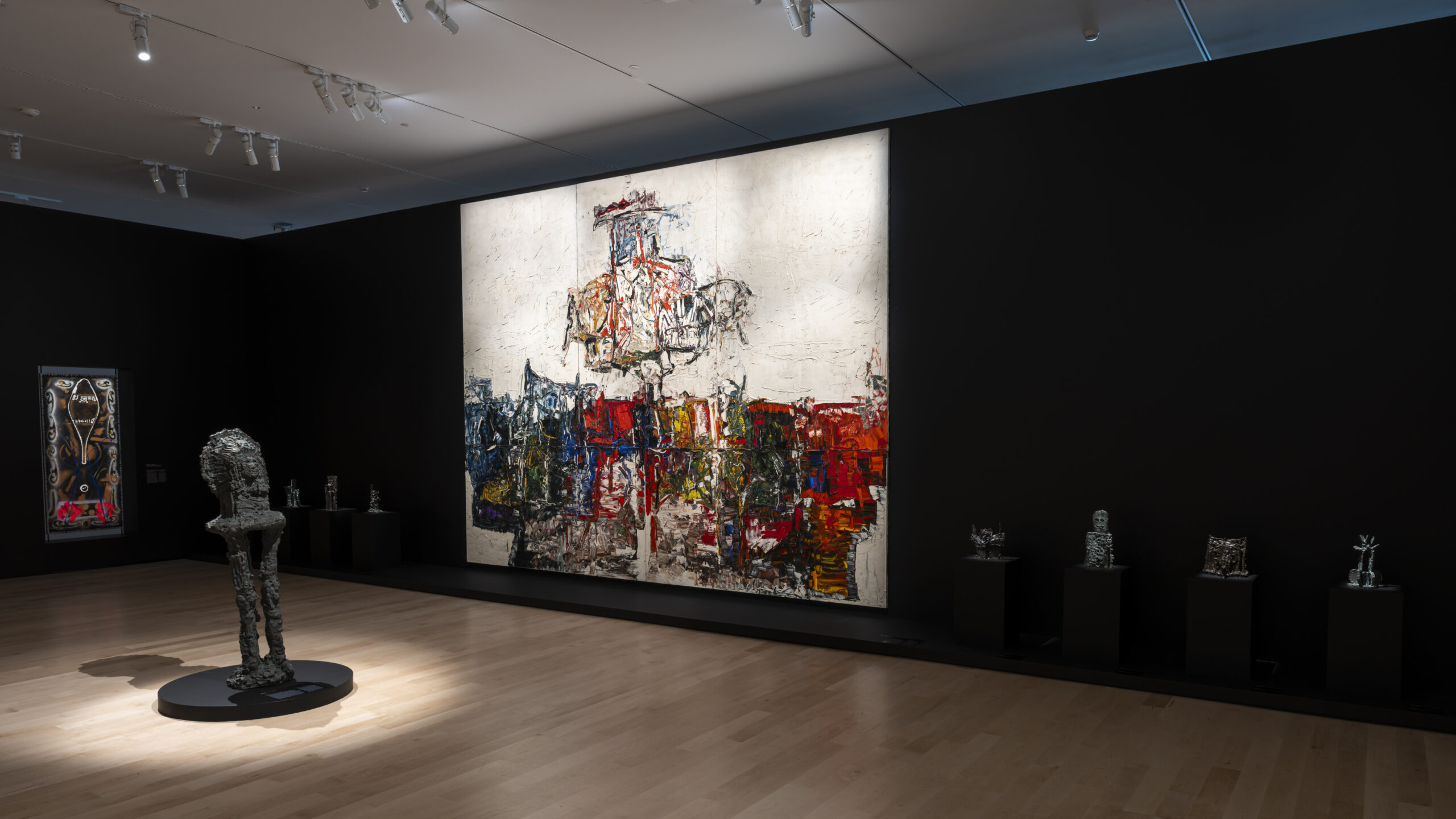
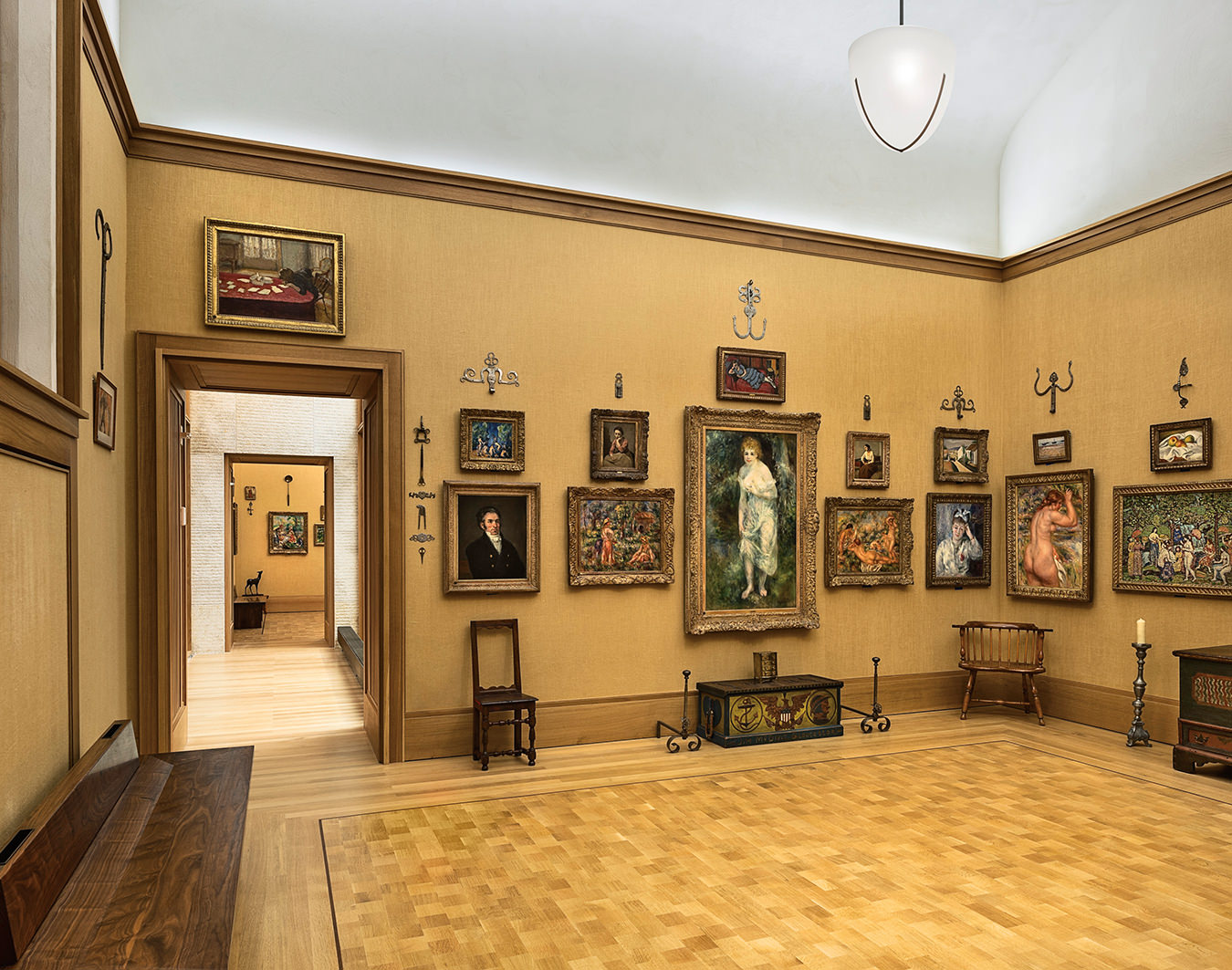
View of the exhibition Riopelle. The Expression of Gesture, Musée national des beaux-arts du Québec. Photo by MNBAQ, Louis Hébert.
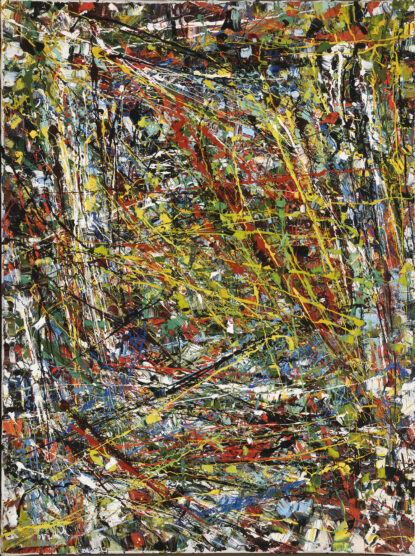
Jean Paul Riopelle, Untitled, 1930. Oil on canvas, 130.1 × 96 cm. MNBAQ, gift of Pierre Lassonde, art conservation treatment carried out by the Centre de conservation de Québec (2024.75) © Estate of Jean Paul Riopelle / CARCC Ottawa 2026. Photo courtesy of MNBAQ, Louis Hébert.
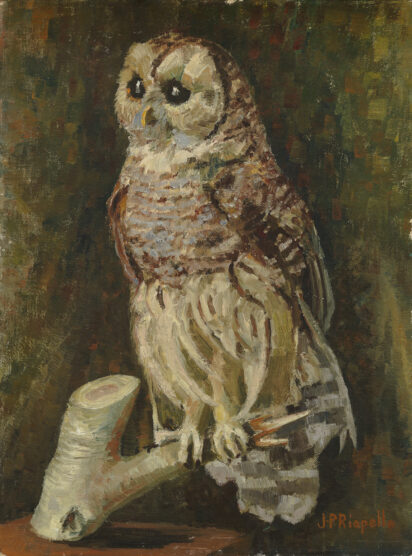
Jean Paul Riopelle, Hibou premier, between 1939 and 1941. Oil on canvas board, 40.5 × 30 cm. MNBAQ, gif of the Estate of Jean Paul Riopelle (2003.56) © Estate of Jean Paul Riopelle / CARCC, Ottawa, 2026. Photo by MNBAQ, Idra Labrie.
The nearly 54,000-square-foot, three-storey space was designed by Montreal firm Les Architectes FABG. While the abstractions are far from representational, Riopelle was deeply interested in both exploring and depicting nature. The architecture brings this connection to the forefront. During the recent opening of the $84-million pavilion, the Plains of Abraham were in full fall colour, their range of yellows and browns mirroring Riopelle’s own palette. The view of the glittering St. Lawrence River on a sunny day is reminiscent of the glint of bright angles in his compositions.
“We wanted to offer a strong connection with the surrounding landscape and the sky. Riopelle’s artwork was not a representation of nature but a reaction to it,” says Éric Gauthier, associate architect at Les architectes FABG. As visitors move between the surrounding nature, easily on view through the many glass walls, and the paintings housed within, the connections start to unfold, and an opportunity arises to see the paintings in a new way. “We incorporated as many windows and terraces as we could to open up the building towards the beautiful Plains of Abraham that surround it,” Gauthier notes.
Espace Riopelle is a visual articulation of the artist’s values, desires, and character. These intangible characteristics are woven into the physical space, including a custom scent created by the aroma scientist François Chartier that draws from Riopelle’s studio and the elements of his paintings. Visitors can smell the perfume on the third floor, next to Tribute to Rosa Luxemburg. Chartier met Riopelle while working as a sommelier and attended the painting’s unveiling in the early ’90s—a detail that speaks to the attention and care brought to the project.
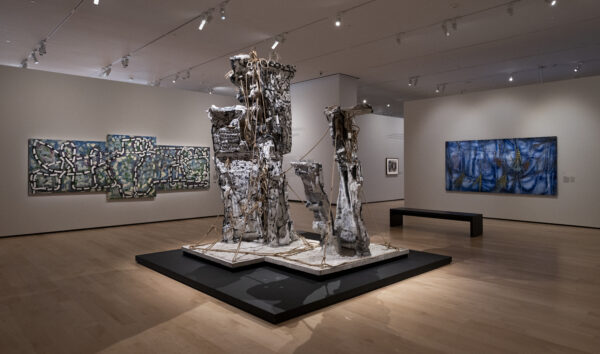
View of the exhibition Riopelle. The Expression of Gesture, Musée national des beaux-arts du Québec. Photo by MNBAQ, Louis Hébert.
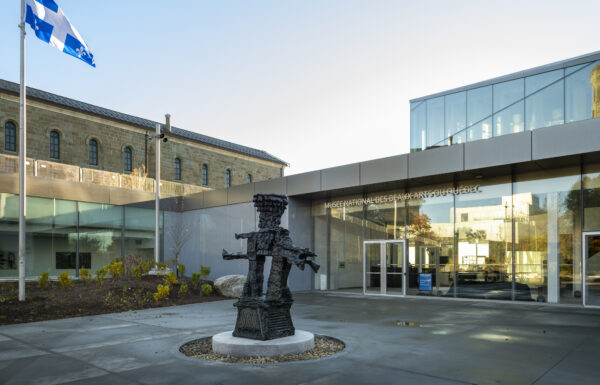
Jean Paul Riopelle, The Tower (1969-1970), cast in 1974. Bronze, 1/4, 258 × 243 × 85 cm. MNBAQ, purchase made possible by donation from Pierre Lassonde and a group of patrons (2004.418) © Estate of Jean Paul Riopelle / CARCC, Ottawa, 2026. Photo by MNBAQ, David Cannon.
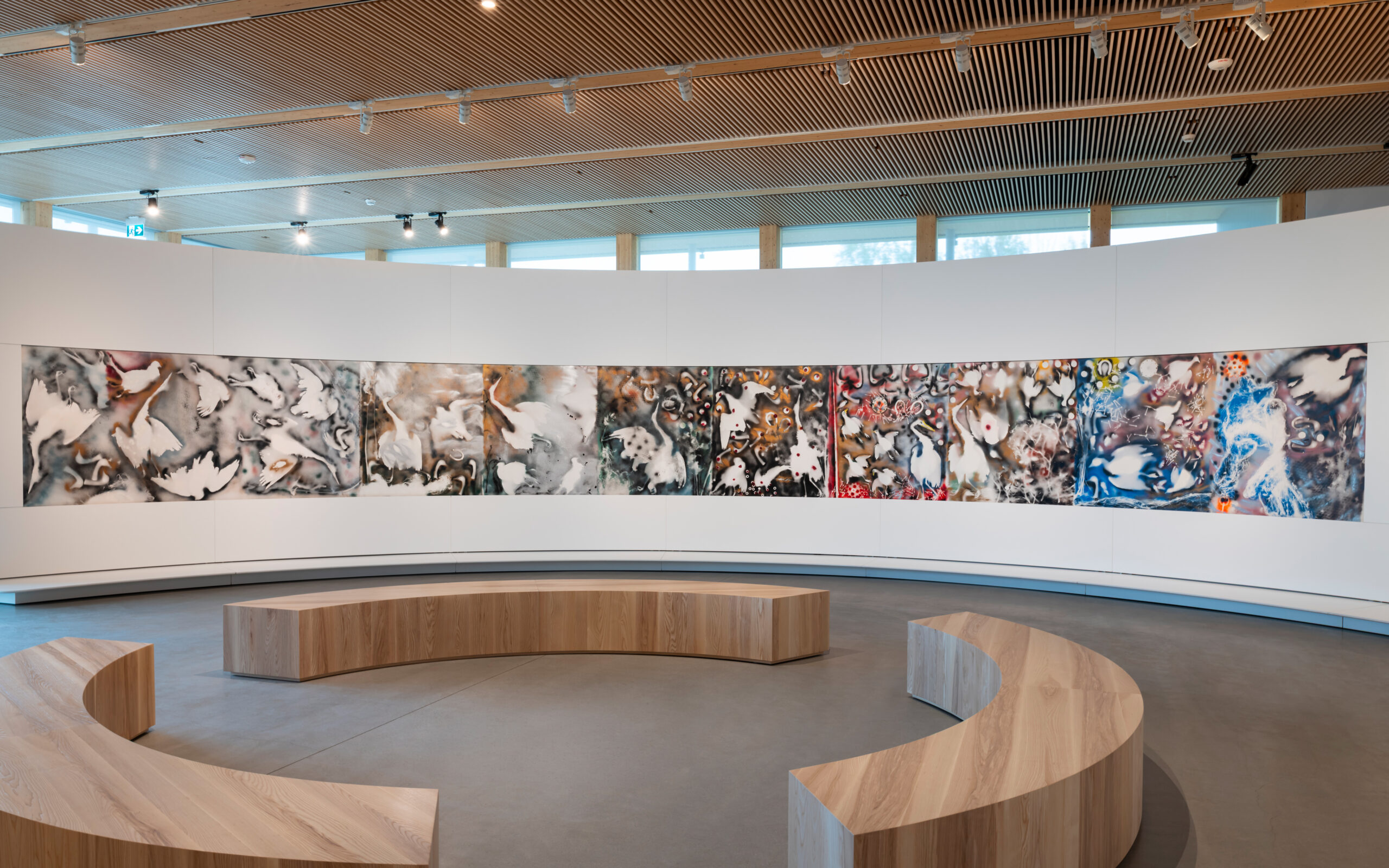
Overview of the gallery housing Tribute to Rosa Luxemburg (detail) to the Espace Riopelle – Michael Audain Pavilion, Musée national des beaux-arts du Québec. Photo by MNBAQ, Louis Hébert.
Riopelle’s studio continued to serve as a blueprint for the space, with the architectural firm drawing inspiration from his sprawling workspaces. “We looked at the studios he built for himself, the cathedral ceiling at Sainte-Marguerite-du-Lac-Masson with its massive wood structure pierced by numerous windows and the generous volumes,” Gauthier says. The same attributes are repeated in the entryway, with its solid black-spruce ceiling with wooden beams and a sloped roofline. The mezzanines were inspired by Riopelle’s conversion of an aircraft hangar in Saint-Cyr-en-Arthies: “We simply tried to embody his sense of space.”
The opening of Espace Riopelle is a nice full-circle moment: the Musée national des beaux-arts du Québec was one of the first museums to acquire one of Riopelle’s works. The museum is the culmination of more than 50 cultural initiatives, ranging from musical performances and literature to even a circus, to celebrate the renowned Quebec artist.
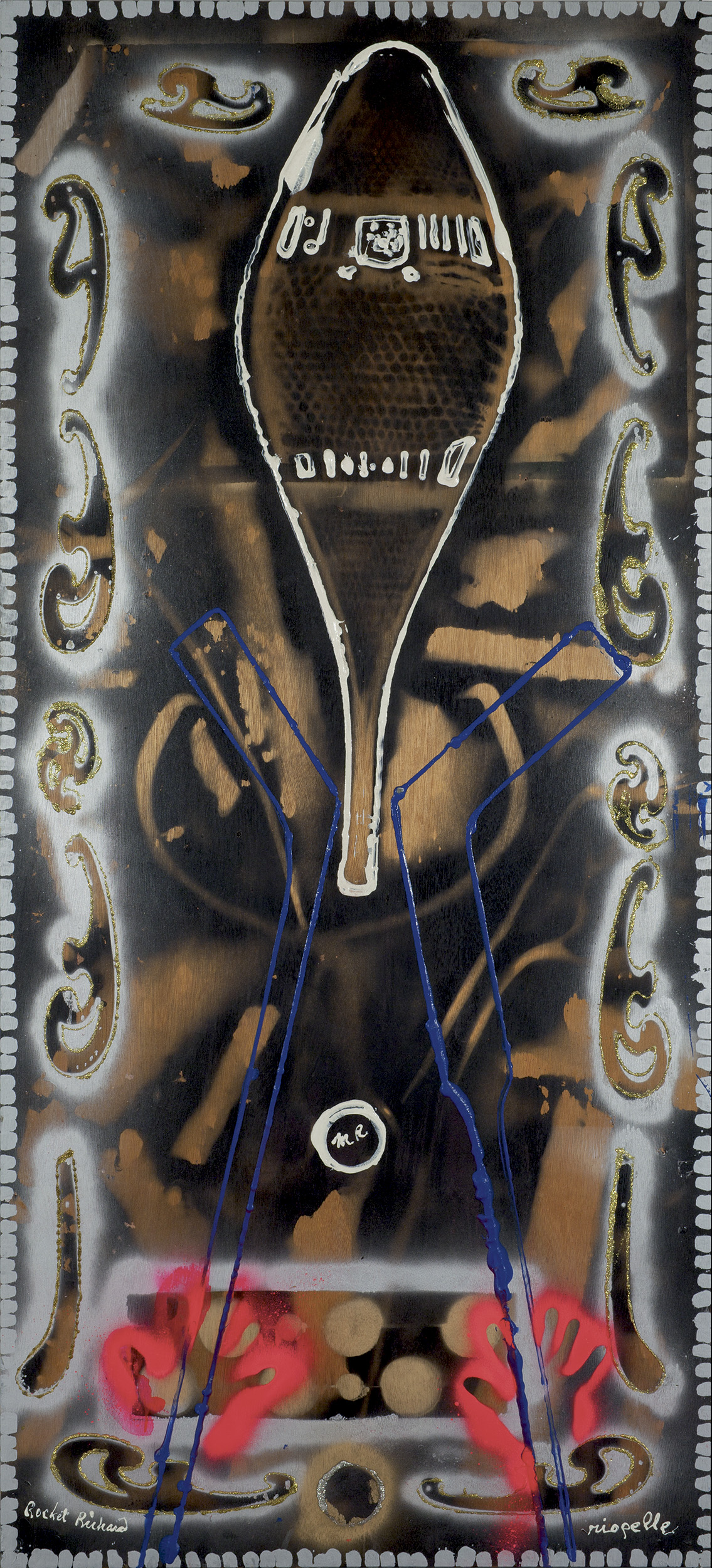
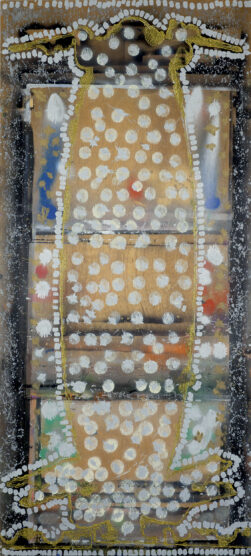
Jean Paul Riopelle, Tribute to Duchamps (Tribute to Maurice Richard), 1990. Acrylic, oil, silver and gold metallic paints with metal glitter on plywood (front and back), 203.2 × 91.4 cm. Musée d’art contemporain de Montréal, gift of Maurice Richard (D 94 35 P1) © Estate of Jean Paul Riopelle / CARCC, Ottawa, 2026. Photo by Richard-Max Tremblay.
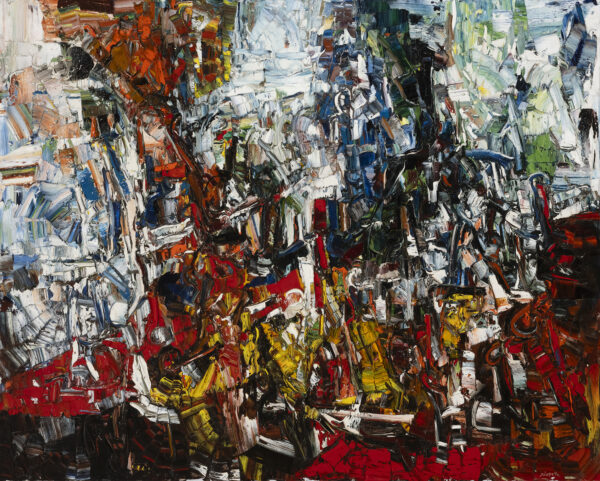
Jean Paul Riopelle, Garden, 1957. Oil on canvas, 129.7 × 162.5 cm. MNBAQ, gift of Michael Audain and Yoshiko Karasawa (2025.64) © Estate of Jean Paul Riopelle / CARCC, Ottawa, 2026. Photo by MNBAQ, Louis Hébert.
Perhaps the most notable room in the gallery is a tribute to the mournful work Tribute to Rosa Luxemburg, which Riopelle painted after his former partner, Joan Mitchell, died in 1992. It stretches more than 40 metres across 30 paintings and was created over a three-month sprint. With a recurring bird motif, the work reads as a choreographed dance of love and loss. “The very story behind the mythical Tribute to Rosa Luxemburg is somewhat like a testament, a journey through Riopelle’s life. It is almost autobiographical, weaving together themes of grief, love, life, nature, and artistic renewal,” Manon Gauthier, General Commissioner of the Riopelle Centennial and Executive Director of the Audain Foundation, says.
An entire room is necessary to fully immerse yourself in the painting and, in turn, the grief and love embedded within. “Not unlike Monet’s Water Lilies at Musée de l’Orangerie in Paris or the Rothko Chapel in Houston, Quebec City now has its Rosa at the Musée national des beaux-arts du Québec. It truly is the crowning jewel of Espace Riopelle.”
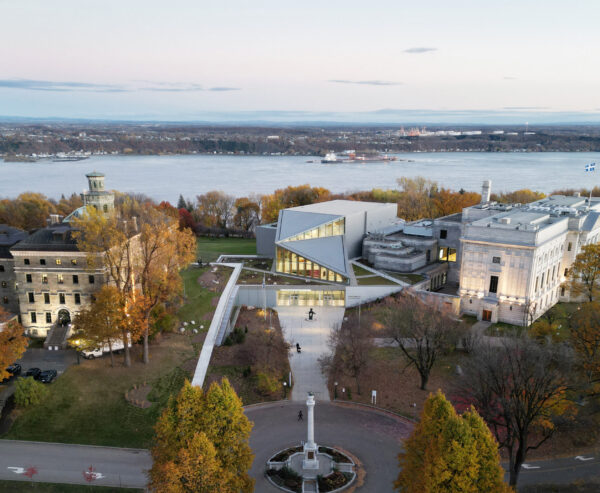
At the center, Espace Riopelle – Michael Audain Pavilion of the Musée national des beaux-arts du Québec. Photo by Steve Montpetit.