Porsche Mission S: A New World Order
With a new supercar concept, Porsche prepares to challenge the established hierarchy of automotive exclusivity.

There are certain places in the world where history has a habit of repeating itself. Sometimes, this happens by coincidence. Other times, it’s by design.
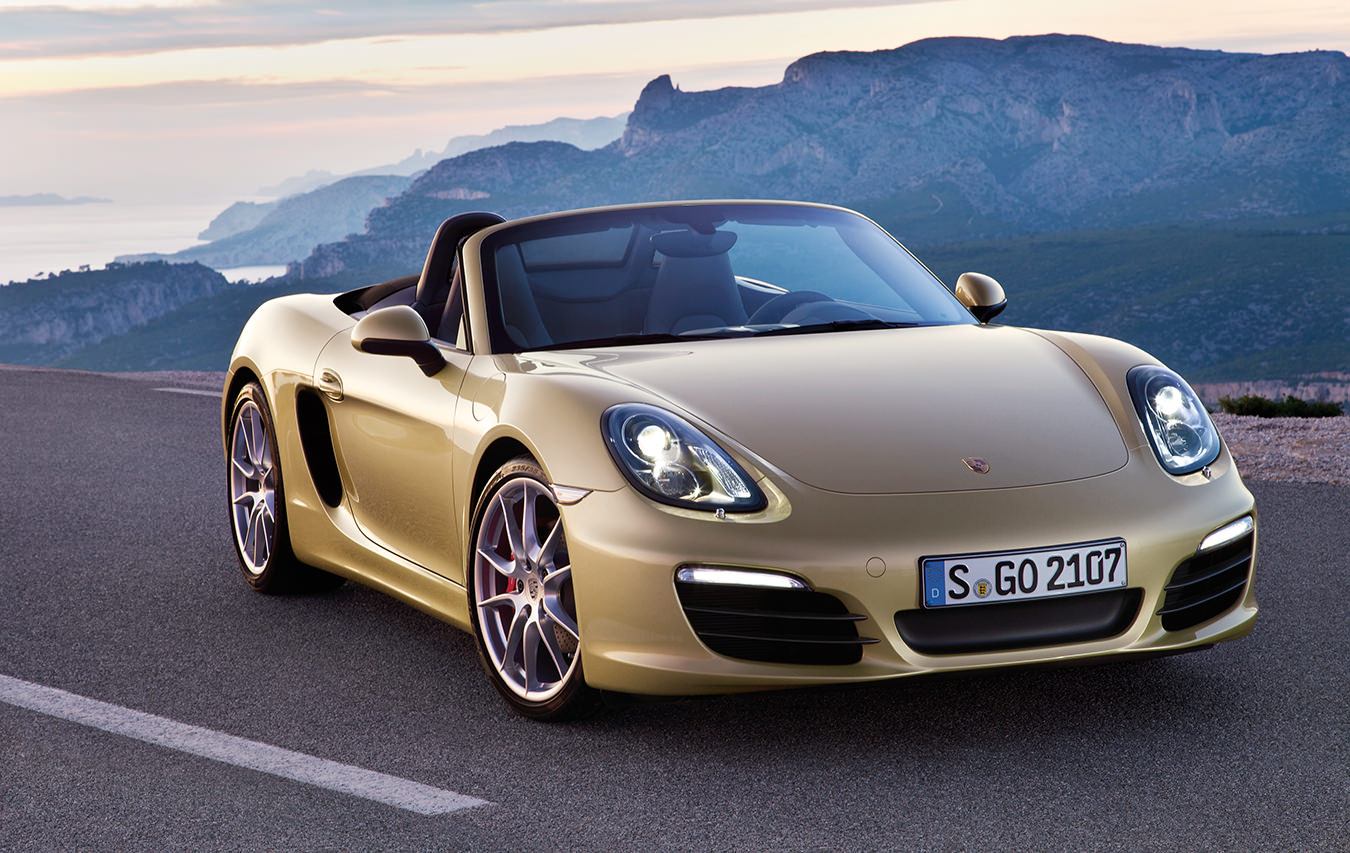
On October 15, Porsche unveiled the Mission S on a pier in Queens, the exact location where the original 550 Spyder was photographed in 1953. That car helped establish Porsche’s reputation in America. Some 73 years later, the German manufacturer has returned to the same spot with another mid-engined machine, one that could help redefine its place in the automotive world.
The Mission S is officially a design study, but that’s selling the project short. For the first time in its history, Porsche has announced plans for a permanent family of super sports cars positioned above the iconic 911: not a limited-production experiment, like the 959, Carrera GT, or 918 Spyder, but an entirely new platform capable of supporting multiple models. For those who collect Porsches, rather than simply drive them, this is significant news.
There’s also an interesting subplot involving Michael Leiters, the man now calling the shots in Stuttgart. He became Porsche CEO earlier this year, following stints as chief technology officer at Ferrari and CEO of McLaren Automotive. He understands why their most desirable vehicles command extraordinary prices. But he also worked at Porsche earlier in his career, so he understands what makes a great Porsche.


This experience could prove invaluable as Porsche implements its new Sportwagenschmiede ’35 strategy. Announced the week before the Mission S reveal, the strategy places greater emphasis on exclusivity, personalization, and profitability.
Of course, exclusivity without compelling design is a difficult proposition. Fortunately, the Mission S is an arresting piece of work, drawing inspiration from Porsche’s extensive back catalogue without becoming an exercise in nostalgia.
Under the guidance of Tobias Sühlmann, head of Style Porsche, the design incorporates prominent front fenders and circular headlights reminiscent of the 911. The flat nose references the competition-bred 911 GT1, while the sweeping roofline evokes the technologically advanced 959.
Look closer, and there are more connections: wheels inspired by the 928, a rear cooling fan that harkens back to the legendary 917 racing car, and an integrated active rear wing.


Yet the most important design decision may be the one you cannot see. By adopting a mid-engined architecture, Porsche’s designers have been liberated from the familiar proportions of the rear-engined 911. The resulting silhouette is lower, more dramatic and distinctly different.
As for what powers the Mission S, Porsche is not making any promises—at least not yet. The prototype arrived on the scene powered by something other than electrons. The exhaust note confirmed internal combustion was taking place. But at the unveiling, Leiters announced that “customer demand will decide what we build on this platform.”

So there’s no confirmed engine configuration, no definite word on electrification, and no production timetable. Pricing and production volumes are similarly unknown. These details will determine just how exclusive the eventual cars become. But the broader direction is already apparent. Porsche is creating space above the 911, giving itself the freedom to pursue a different kind of customer and a different definition of desirability.
Back on that pier in Queens, the connection to the 550 Spyder was impossible to miss. The original helped Porsche find its footing in America. The Mission S suggests a company seeking something more elusive: a higher place in the hierarchy it helped create.