Lamborghini Temerario: Into Thin Air
A full-speed test of Lamborghini’s new Temerario at Canadian Tire Motorsport Park.
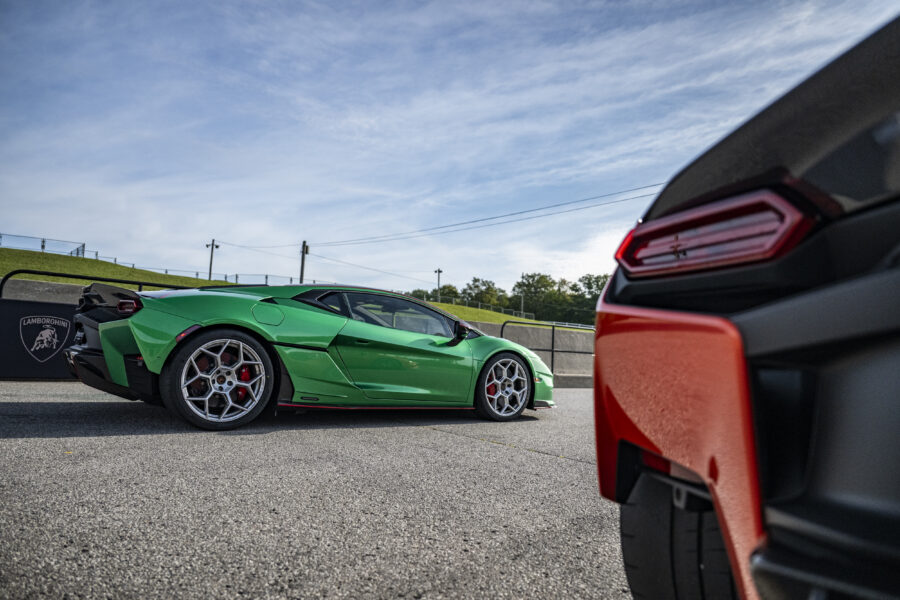
There’s a point on the Andretti Straight at Canadian Tire Motorsport Park (CTMP) where the pavement rises toward a crest before falling away in the direction of Turn 8. The crest was shaved down years ago to calm the behaviour of very fast cars travelling very quickly and to keep said cars more earthbound.
After driving the new Lamborghini Temerario over this crest at upwards of 285 kilometres per hour, I’m beginning to think a closer shave might be required.
Introduced last year, the Temerario is the replacement for the Huracán and, in certain respects, a clean break from it. Gone is the naturally aspirated V10, one of the more charismatic engines of the modern supercar era. In its place is a four-litre twin-turbocharged V8 connected to three electric motors, for a combined output of 907 horsepower.
The combustion engine alone is something unusual. It can spin to 10,000 rpm, a figure more normally associated with motorcycles and racing engines. At that speed, each cylinder is firing more than 80 times per second. The result is not the basso profundo soundtrack of a traditional V8 but something sharper and more urgent as the revs climb.
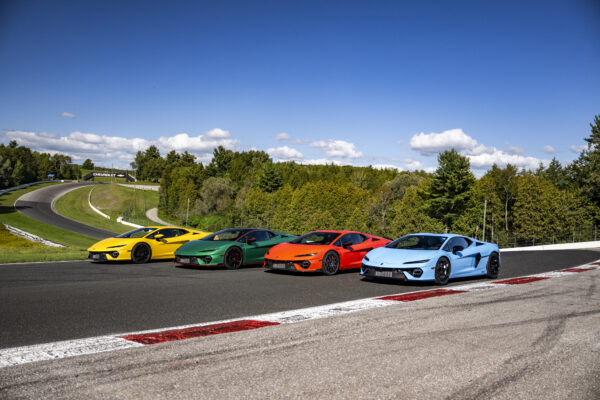
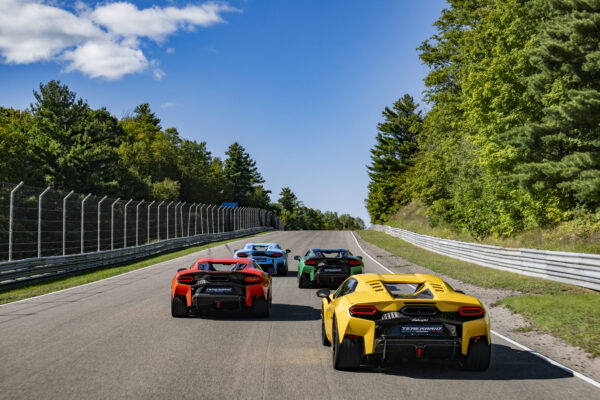
Performance is predictably serious: 0 to 100 kilometres per hour in 2.7 seconds and a top speed beyond 340 kilometres per hour. More interesting is how Lamborghini has integrated electrification into the car. Two electric motors drive the front axle, while a third assists at the rear, providing constant all-wheel drive and filling in the power delivery almost instantaneously.
There are 13 driving modes available through various combinations of chassis, powertrain, and stability-control settings. At the far end of the spectrum sits Corsa with the electronic stability control switched off, a configuration Lamborghini itself advises should be treated with caution. Drift mode goes one step further. Before activating it, the driver must acknowledge a disclaimer. (Lawyers—always interfering with the fun, it seems.)
At CTMP, though, the most revealing change had nothing to do with electronics. It came from moving between two versions of the same car.
The first Temerario was fitted with bespoke Bridgestone Potenza Sport road tires. On track, the car was extremely fast and remarkably composed, but there was also a sensation that the chassis was waiting for the pavement to provide more grip. The limits seemed to reside less in the Lamborghini than in the four patches of rubber connecting it to the circuit.
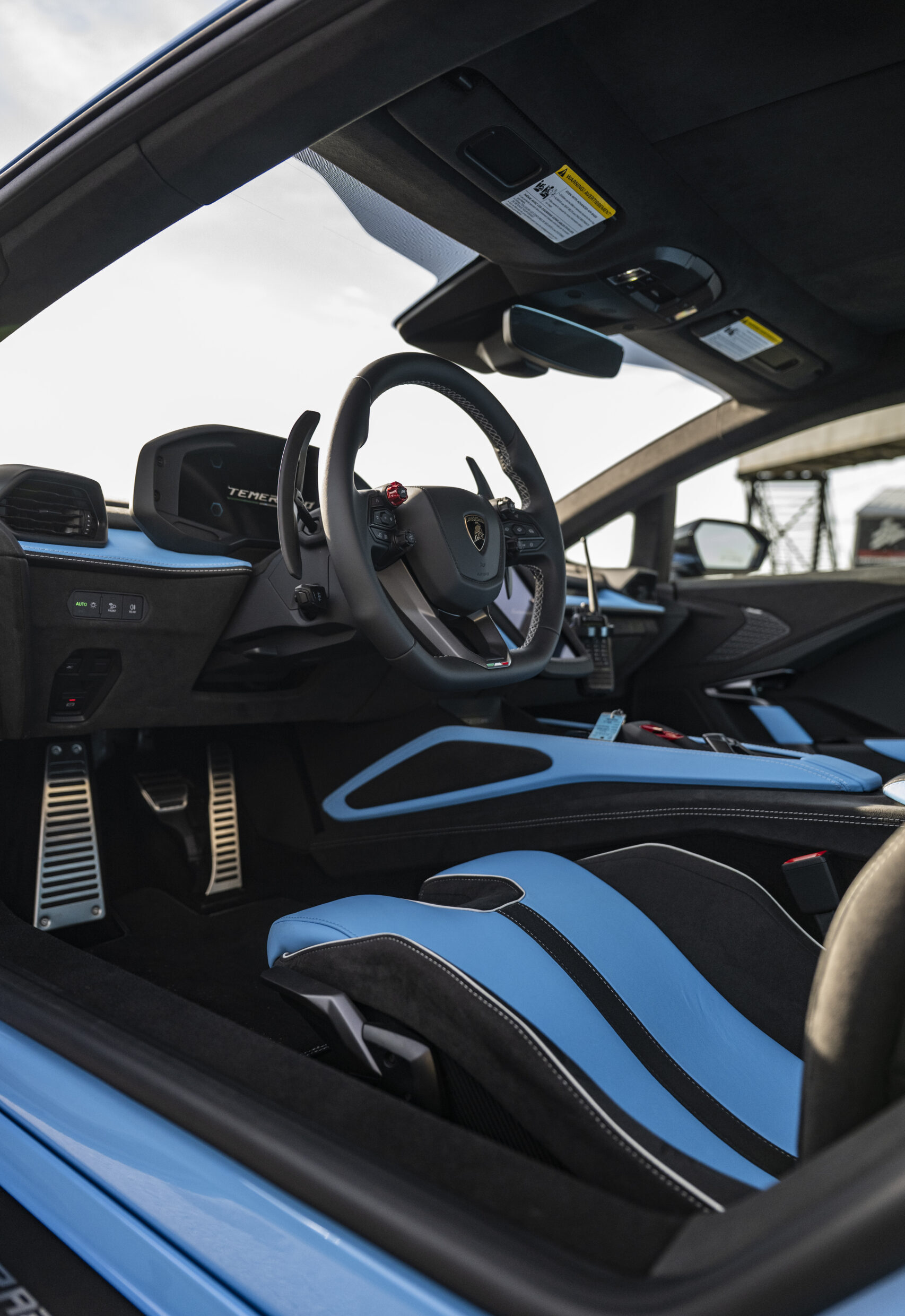

Then came the Alleggerita-equipped car on Bridgestone Potenza Race tires.
The Alleggerita package trims over 25 kilograms from the Temerario while also improving aerodynamic efficiency and increasing downforce. Those changes matter. But over a handful of laps at CTMP, the difference in tire compound was impossible to ignore: the character of the car changed almost immediately.
Cornering speeds rose to the point where the Temerario no longer felt like a road car enjoying an afternoon at the track. It felt closer to a competition car that had somehow retained licence plates. Braking zones contracted. The chassis settled through the faster corners with greater confidence. Where the Potenza Sport-equipped car seemed to be asking the tires for more, the Potenza Race version just supplied more.
At that point, a roll cage no longer seemed like an unreasonable idea.
CTMP has a way of exposing weaknesses. It is fast, narrow in places, and full of elevation changes that conceal what comes next. Momentum matters here, and so does judgement. A car capable of carrying substantially more speed through one corner simply delivers you to the next problem sooner.
The Temerario Alleggerita highlights problems very quickly.
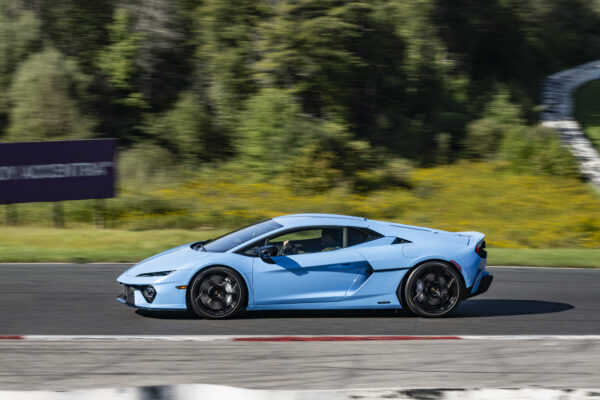
Exiting Moss Corner and climbing onto the Andretti Straight, the hybrid powertrain seems to gather speed without interruption. The V8 moves toward its 10,000-rpm ceiling, while the electric motors fill whatever gaps might otherwise exist. The acceleration does not arrive as a single violent event. It just seems to continue, unabated.
By the time the car reaches the upper portion of the straight, a hurried glance at the speedometer reveals 285 kilometres per hour or so. Then comes the aforementioned crest. For an instant, the suspension unloads, and the Temerario becomes noticeably lighter beneath you. Turn 8 lies somewhere beyond the rise, lurking to test the bravest of the brave.
The instinct right then and there is to lift. Only slightly. But enough. The Temerario has already made its point by then. This is a car with such immense reserves of speed and grip that CTMP, a circuit that has humbled generations of drivers, suddenly feels in need of recalibration. The crest on the Andretti Straight has been shaved before. After 285 kilometres per hour in the Temerario, it seems there may still be a little left to take off the top.