The Royal Jewels That Found Refuge in Quebec
A sparkling, century-old mystery is revealed in Quebec City.
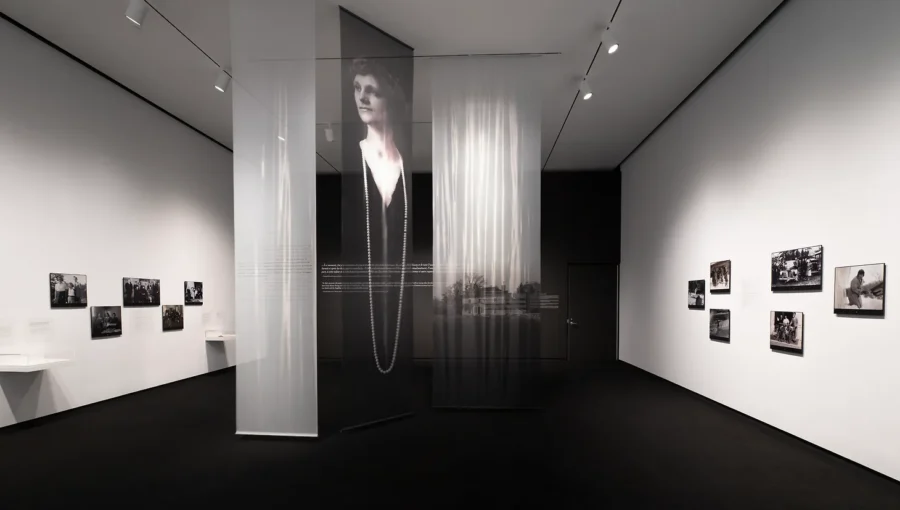
The glittering remnants of a once-great empire are on display as part of a world premiere exhibition at the Musée national des beaux-arts du Québec in Quebec City.
The historic Habsburg jewels, missing and presumed lost for a century, are the focus of the new Hidden Treasure: A Century of Mystery exhibition at the MNBAQ. The museum is displaying the prestigious jewels associated with the Austro-Hungarian royal family for the first time, revealing a story with a strong Quebec connection.
The collection, including the stunning 137-carat Florentine Diamond, was spirited from Europe by Zita of Bourbon-Parma, the last Empress of Austria and the Queen of Hungary, who fled Vienna after the collapse of the Austro-Hungarian Empire after the Second World War and found refuge in Quebec City in October 1940.
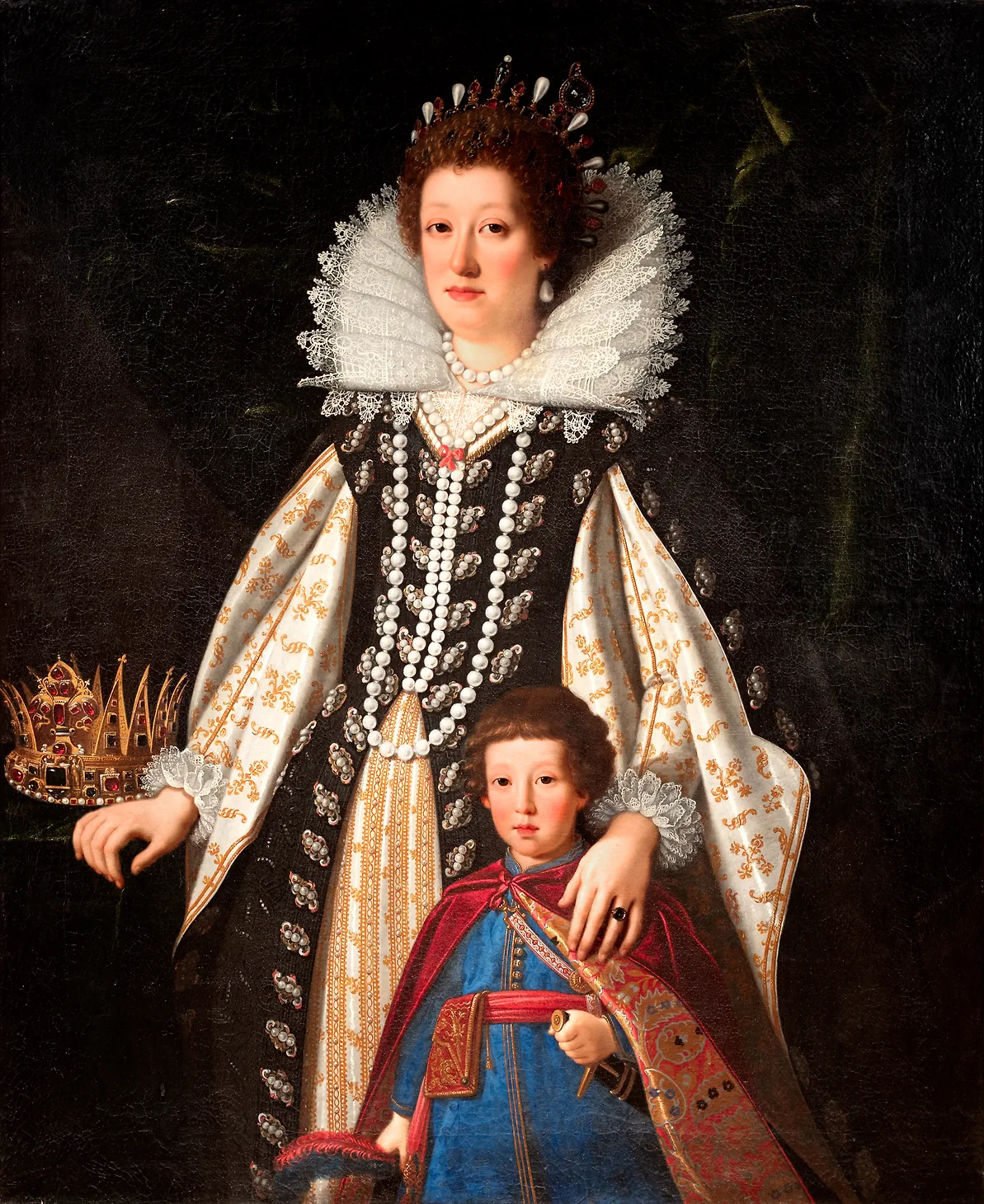
Justus Suttermans, Maria Maddalena of Austria (Wife of Duke Cosimo II de Medici) with Her Son, the Future Ferdinand II, 1623. Photo courtesy of Flint Institute of Art.
Secreted away in a small leather case secured with silver lock and key for more than a century, the 15 jewels include the magnificent double-rose-cut yellow Florentine Diamond, Marie Antoinette’s diamond-encrusted pocket watch, and the large diamond insignia of the Order of the Golden Fleece, symbolic of one of Europe’s most prestigious Catholic orders of chivalry and an important part of the Habsburg dynastic identity.
The exhibition, which debuted September 4, 2026, has three parts, starting with the historical context that sets the stage for the remarkable story: the Habsburg dynasty’s legacy, Charles Habsburg-Lorraine’s marriage to Zita of Bourbon-Parma in 1911, their unexpected ascension to the throne, the collapse of the Empire in 1918, and the years of exile that brought the empress and her eight children to Quebec.
The exhibit then ties the story of the imperial family to photos, works, and objects associated with 19th-century Quebec society, and their quiet home life at the Villa Saint-Joseph in Sillery.
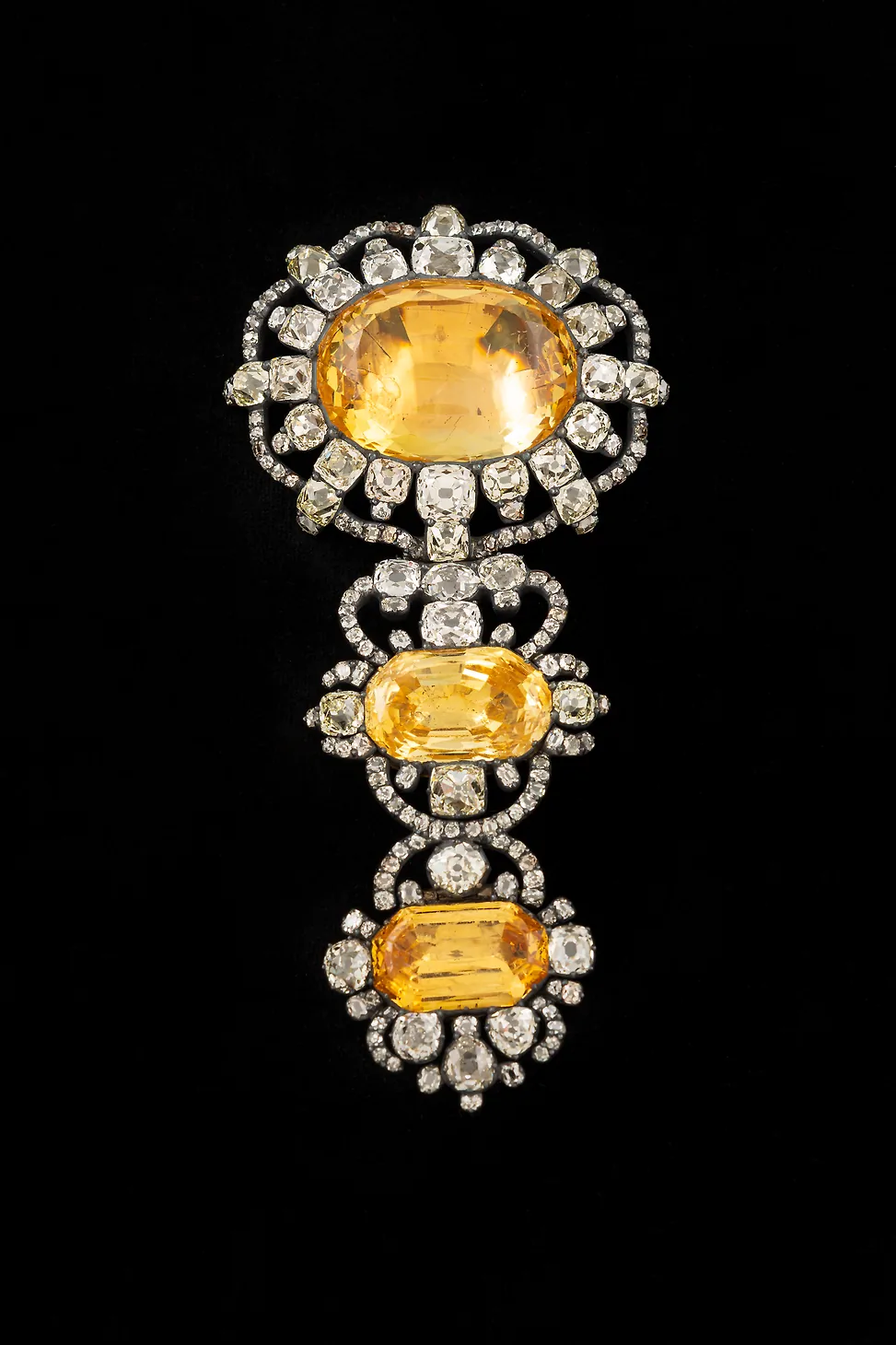
Unknown European jeweller, Hat pin in the colours of the Austrian Empire, 18th century. Photo courtesy of MNBAQ and Louis Hébert.
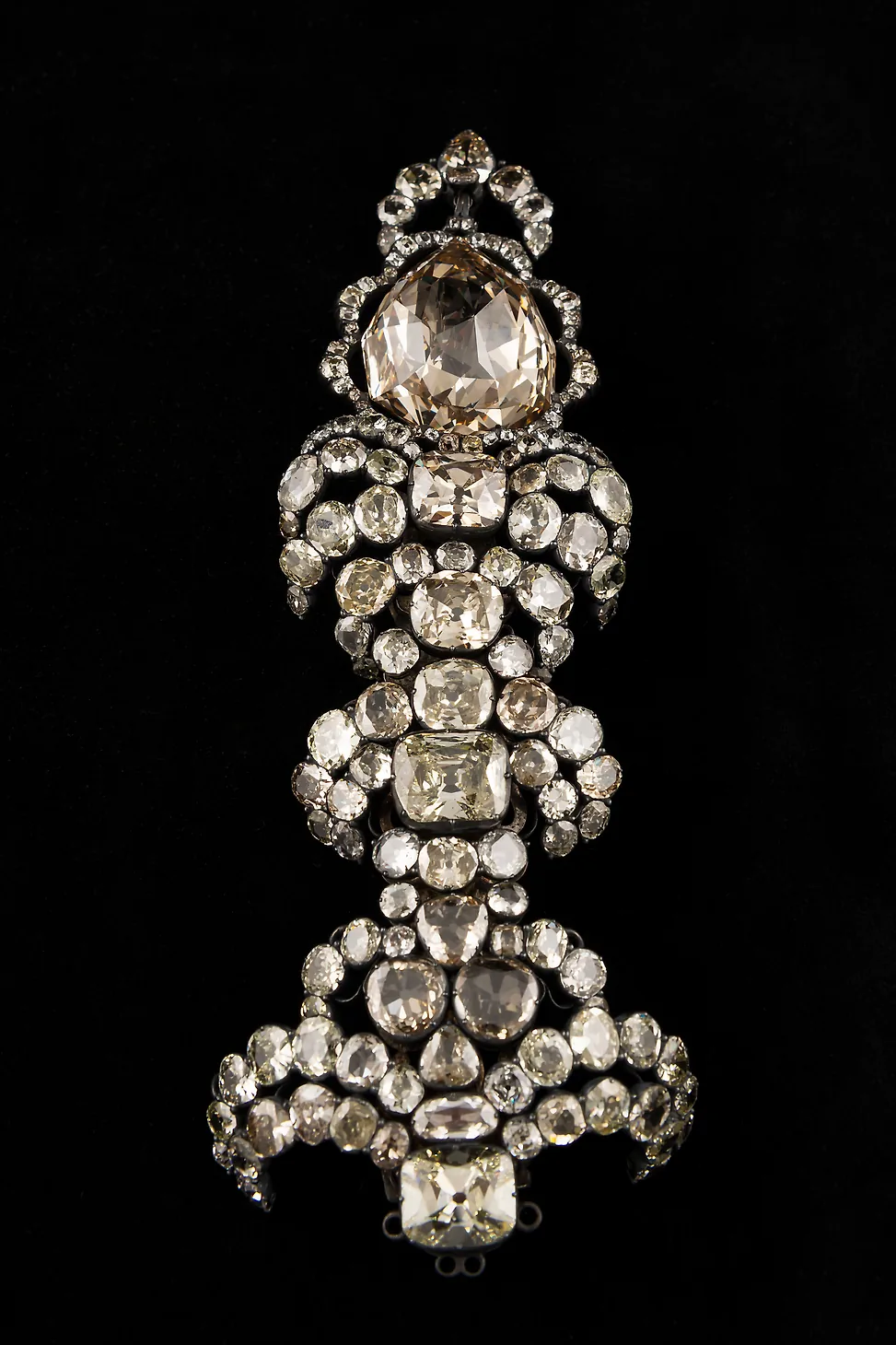
Unknown European jeweller, Hat pin, 18th century. Photo courtesy of MNBAQ and Louis Hébert.
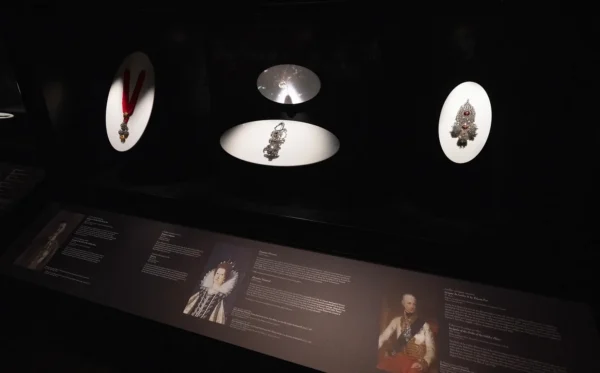
The artful display of the 15 jewels, as well as the case that protected them for decades, is the exhibition’s final act. The crown jewels of Austria–Hungary are official regalia, symbols of authority and dynastic continuity passed down from one reign to the next, and have been authenticated by a descendant of the original Austrian jewellers to the imperial court.
Christoph Köchert of A.E. Köchert flew to Canada to authenticate the jewels upon their discovery in 2025. “To hear that these jewels still exist, and in Canada, was a very big moment for me,… and that I was asked to authenticate whether these pieces are genuine,” Köchert recalls in a video describing the process. He experienced the drama of holding the small, dark-brown crocodile-and-kidskin-leather suitcase in which the jewels were kept for a century, wrapped simply in thin tissue paper.
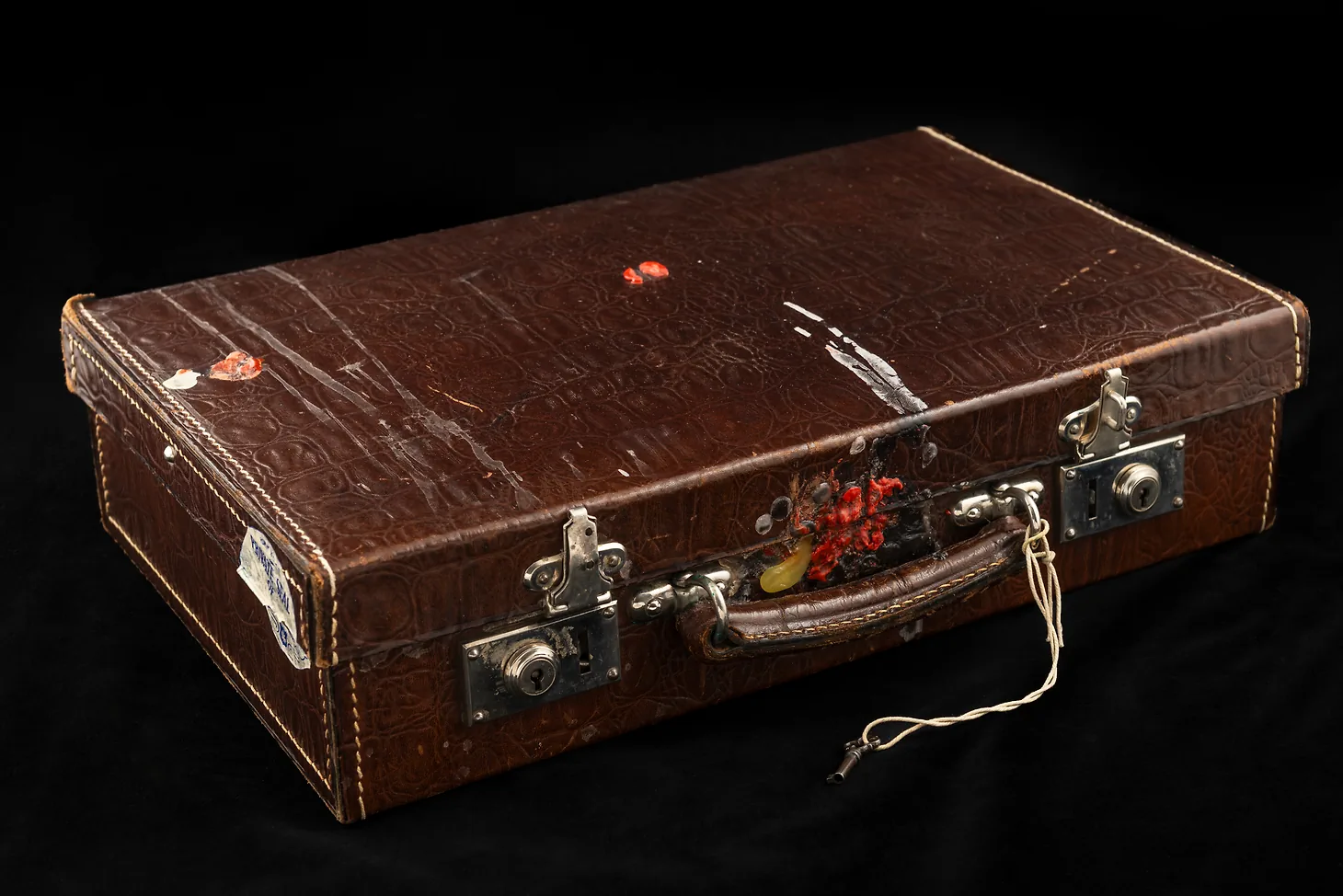
Unknown European leather goods maker, Briefcase, 20th century. Photo courtesy of MNBAQ and Louis Hébert.
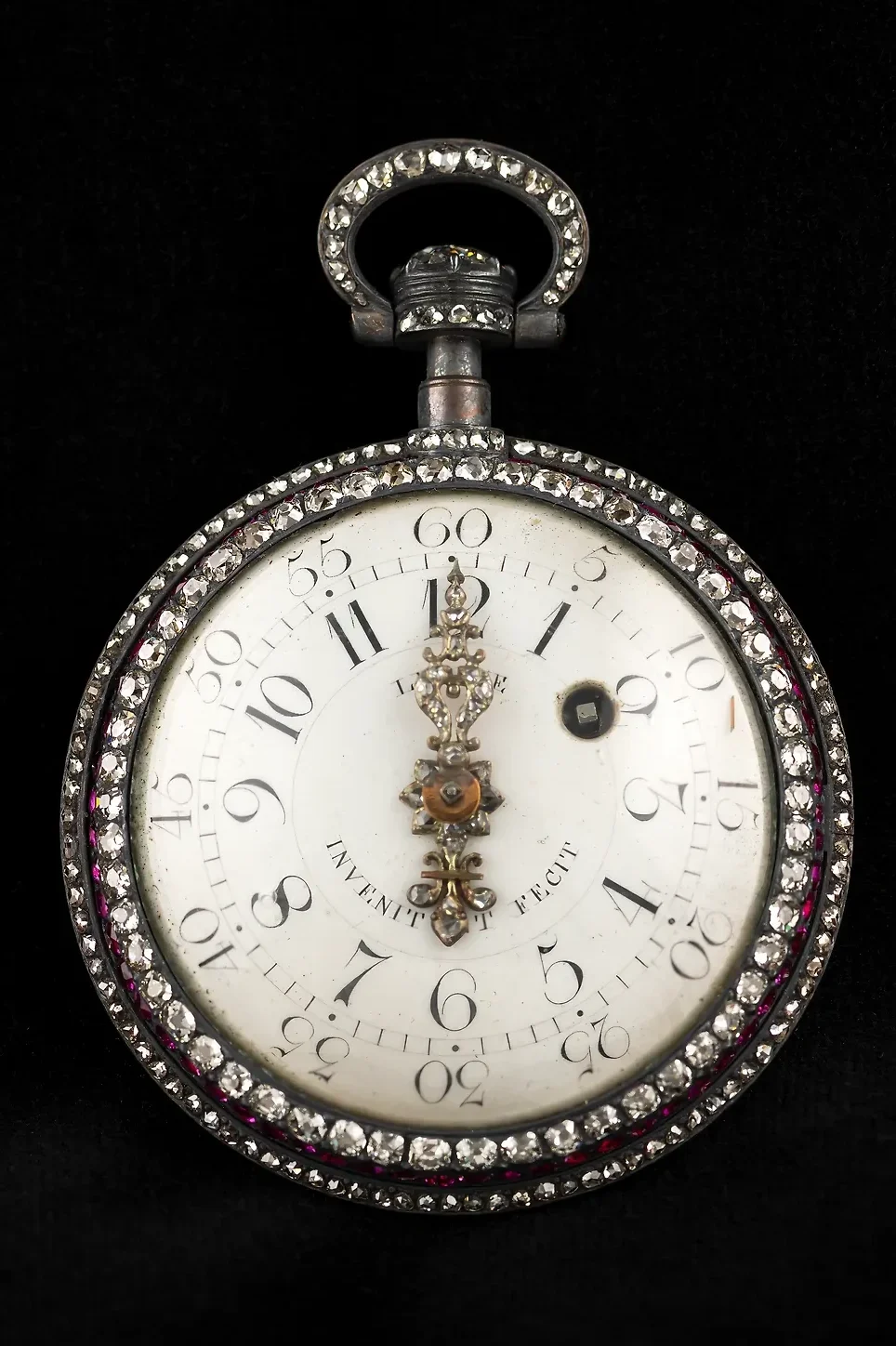
Jean-Antoine Lépine, Pocket watch, c. 1770 of before. Photo courtesy of MNBAQ and Louis Hébert.
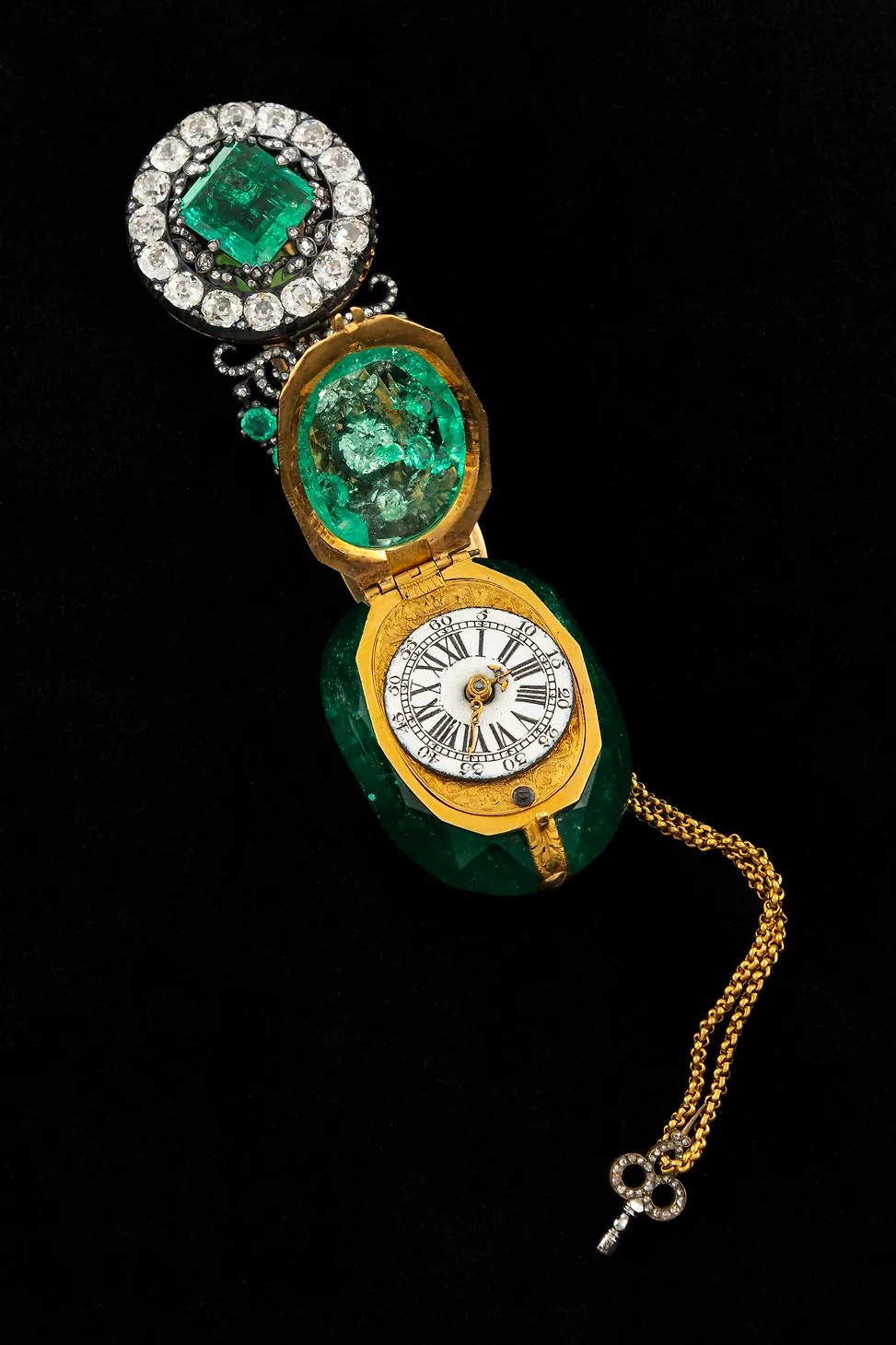
Unknown European jewellers, Watch, 16th, 17th, and 18th centuries. Photo courtesy of MNBAQ and Louis Hébert.
After her husband, Charles I, died in 1922, Zita had decided that the location of the jewels would not be revealed for at least 100 years. She shared her secret with two of her sons, who transmitted it to two of theirs, before it was publicly unveiled in 2025.
Viewing the diminutive suitcase in its glass exhibition enclosure is a powerful moment, revealing the beauty and sparkle of the priceless jewellery it kept hidden for so long.
“The whole story of escape and expulsion became visible,… the fate that so many people had at that time. So many had to leave their homes and could only take with them what they could carry on their bodies or in a small suitcase,” Köchert says. “This simultaneity of great history, splendour, unique objects—the best that humans can produce—and this vulnerability and how fragile everything is.”
A story of legacy, resilience, and an unexpected bridge between Europe and Quebec, the Hidden Treasure exhibition opens September 4, 2026.
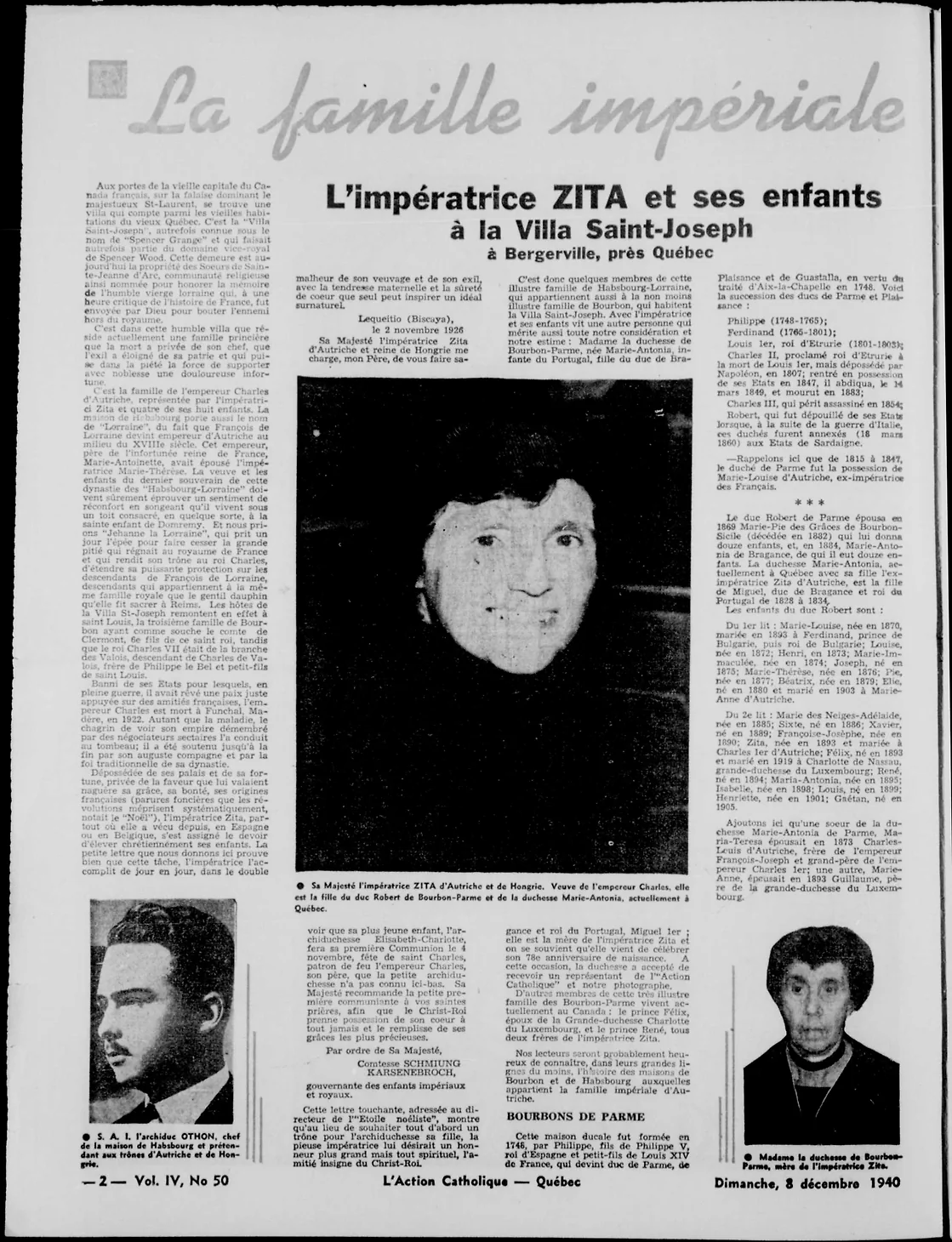
Unknown, The imperial family. Empress Zita and her children at the Villa Saint-Joseph in Bergerville, near Quebec City, L ’Action catholique, December 8th, 1940, p. 2. Bibliothèque et Archives.